ncr-iran.org
Clustered Story
Iran News in Brief – March 2 , 2026
ncr-iran.org · Mar 2, 2026 · Collected from GDELT
Summary
Published: 20260302T164500Z
Full Article
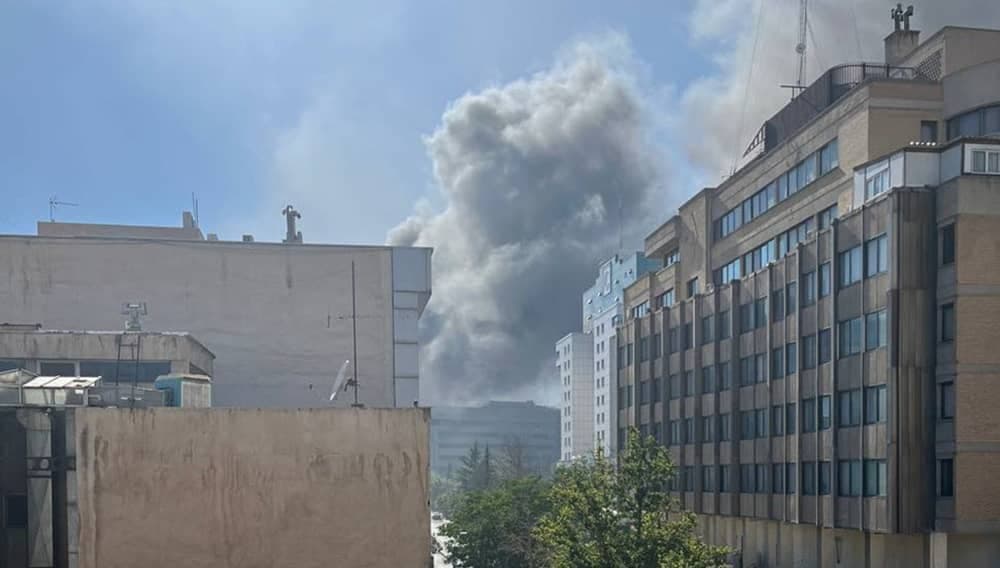
THIS PAGE WILL BE UPDATED WITH THE LATEST NEWS UPDATE: 05:00 PM CET Iran Targets Gulf Allies, U.S. Deploys More Forces as Casualties Mount The regime in Iran has launched retaliatory missile and drone attacks on several Gulf countries, including the United Arab Emirates (UAE), Saudi Arabia, Qatar, and Kuwait. On March 2, 2026, explosions were reported in cities such as Dubai, Abu Dhabi, and Doha, with civilian infrastructure affected and casualties confirmed (e.g., at least three killed in the UAE). These strikes targeted energy sites and other locations, prompting temporary shutdowns and market disruptions. The UAE closed its embassy in Tehran and withdrew its diplomatic staff in response to the attacks on its territory. Oil prices surged notably (up around 13% in recent reports) due to attacks on facilities like Saudi Arabia’s Ras Tanura refinery (temporarily closed as a precaution after a drone incident) and disruptions in regional energy production and shipping through the Strait of Hormuz. Ongoing U.S. and Israeli airstrikes continued across Iran, hitting multiple sites including Tehran suburbs, military installations, and reportedly the Natanz nuclear facility (as alleged by Iranian officials to the IAEA). Reports indicate hundreds of targets struck in recent days, with Iranian sources claiming widespread impacts in provinces like Yazd, Isfahan, and others. China evacuated over 3,000 of its citizens from Iran amid the violence, following the reported death of at least one Chinese national in Tehran. 'STRIKES CONTINUE': U.S. forces eliminate "imminent threats" posed by the Iranian regime with new strikes targeting an airplane and a hangar containing drones. pic.twitter.com/dH2ljYZotT — Fox News (@FoxNews) March 2, 2026 In Lebanon, tensions rose with Hezbollah claiming responsibility for missile launches toward Israel, prompting Israeli retaliatory strikes and Lebanese government moves to curb Hezbollah activities. The UN Security Council held an emergency session (requested by multiple parties including France, Russia, China, Colombia, and Bahrain), where Secretary-General António Guterres condemned military actions on all sides and warned of uncontrollable escalation. Representatives from various countries expressed positions ranging from condemnation of Iran’s attacks to calls for de-escalation and diplomacy. UPDATE: 12:30 PM CET Escalation in Iran as Coalition Strikes Target Strategic Infrastructure Amid Leadership Crisis The Middle East remains in a state of heightened alert as the military conflict between a United States-led coalition and the clerical regime in Iran enters its third day of intensive operations. Following the start of coordinated strikes on February 28, 2026, reports from both Iranian state media and international news agencies indicate a significant degradation of Iranian military infrastructure and a deepening leadership crisis within the country. Iranian state news agency IRNA and the broadcaster Press TV have focused their coverage on the humanitarian impact of the strikes, reporting that civilian areas in Tehran, Isfahan, and several southern provinces have been hit. One of the most severe incidents reported by Tehran officials involves an elementary school in the city of Minab, southern Iran, where state media claims that approximately 165 children were killed in an airstrike. The Iranian Red Crescent Society has placed the total death toll across the country at over 555 individuals, though these figures have not been independently verified by international observers due to a nationwide internet blackout and restricted movement. ⚠️ Update: #Iran's internet blackout has now surpassed 48 hours, leaving its population of 90 million out of touch as war spreads. Shutdowns are a go-to tactic for the regime, with the previous instance in January lasting several weeks and masking severe human rights violations. pic.twitter.com/ymsZZcH8qS — NetBlocks (@netblocks) March 2, 2026 The political landscape in Tehran has been fundamentally altered by the confirmed killing of Supreme Leader Ali Khamenei during the initial wave of attacks. In response, the government has established a temporary Leadership Council to manage state affairs, comprising President Masoud Pezeshkian, Judiciary Chief Gholam Hossein Mohseni Ejei, and Ayatollah Alireza Arafi. Ali Larijani, the secretary of the Supreme National Security Council, publicly refuted reports of back-channel negotiations with Washington, stating that the country remains committed to self-defense and will not engage in talks under military pressure. On the military front, the Pentagon and the Israel Defense Forces have confirmed that their joint operation has targeted hundreds of sites, including the headquarters of the Islamic Revolutionary Guard Corps in Tehran and ballistic missile storage facilities near Qom and Natanz. The coalition maintains that these strikes are intended to dismantle Iran’s nuclear and missile capabilities. However, international analysts note that the targeting of internal security bases and state broadcasting buildings suggests a broader objective of disrupting the central state command and control. Over the last 12 hours, the regional escalation has sharpened following a series of Iranian ballistic missile strikes launched from the Shiraz region targeting the Al-Dhafra Air Base in the United Arab Emirates and the Al-Udeid base in Qatar. Local authorities in Abu Dhabi have confirmed at least twelve civilian injuries resulting from intercepted debris falling over residential sectors. In the maritime sector, the United Kingdom Maritime Trade Operations reported that a Liberian-flagged oil tanker was disabled by a drone strike 40 miles off the coast of Fujairah, further paralyzing the Strait of Hormuz. Consequently, Brent Crude prices have surged past 78 dollars per barrel as global shipping firms formally suspended all transit through the Persian Gulf. New blasts have been heard in multiple Gulf cities, and the Israeli military said Iran fired another wave of missiles toward Israel. Follow live updates: https://t.co/Ubh3rnXagi pic.twitter.com/oyduL0n4qv — CNN (@CNN) March 2, 2026 Tensions on the northern front have also peaked within the last twelve hours as Hezbollah launched multiple rockets toward the Port of Haifa and the Galilee region, prompting heavy retaliatory artillery fire into Southern Lebanon. Concurrently, the International Atomic Energy Agency expressed extreme alarm after reports emerged of conventional strikes landing within the perimeter of the Bushehr nuclear facility, although no radiation leaks have been detected thus far. As hostilities broaden into the third day, Iranian forces have reportedly expanded missile attacks to include targets in Dubai, Doha, Manama, and Jerusalem, with state media claiming a hit on Israeli Prime Minister Benjamin Netanyahu’s office—a claim denied by Israeli authorities as exaggeration. Iranian Regime Forms Temporary Three-Member Council After Death of Ali Khamenei The Iranian regime’s state television Shabakeye Khabar officially announced and confirmed in the early hours of Sunday the killing of Ali Khamenei, the regime’s supreme leader; news that had been preceded hours earlier by numerous reports of explosions and missile attacks in various parts of the country. Following the killing of Hossein Pakpour, commander-in-chief of the Islamic Revolutionary Guard Corps (IRGC), the state-run Khabar Online website reported the appointment of Ahmad Vahidi as the new IRGC commander. Arab media outlets also reported that the Iraqi government declared three days of public mourning. Former US Secretary of State Mike Pompeo stated that this action was the first step toward a future in which “an evil dictatorship” cannot hold the world hostage, emphasizing that if the mission is not completed, the problem will not be resolved. Read more Prisoners in Iran at Serious Risk Amid Escalating Military Attacks With the onset of renewed aerial attacks and the expansion of military hostilities in Iranian cities, prisons have become among the most vulnerable facilities in the country. Prisoners, who are entirely under the control of security and judicial authorities, have no practical means to evacuate, seek shelter, or protect themselves. In such circumstances, the threat to prisoners’ lives arises not only from external attacks, but also from the way prisons are managed internally by the ruling regime in Iran. Resolution No. 211 of the Supreme Judicial Council was adopted precisely for situations of this nature. Its implementation today constitutes an urgent and non-derivable legal obligation. Read more Also, read Iran News in Brief – March 1, 2026
Share this story