620ckrm.com
Innovation Sask . invests almost $460K in waste , water , antimicrobial projects
620ckrm.com · Feb 26, 2026 · Collected from GDELT
Summary
Published: 20260226T191500Z
Full Article
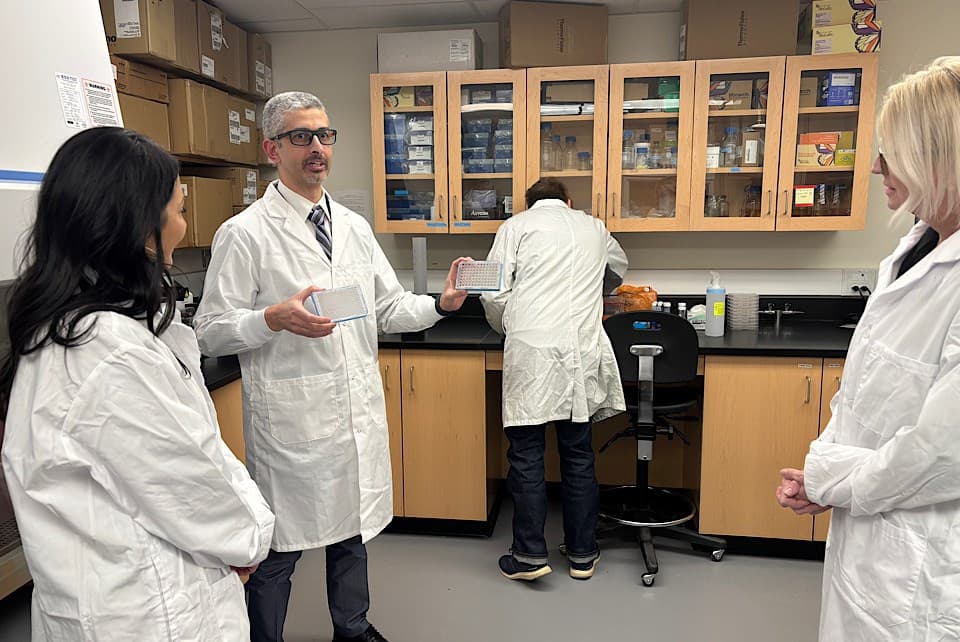
REGINA – Three research projects at the University of Regina are getting a welcome funding boost from Innovation Saskatchewan. Innovation Saskatchewan announced Wednesday it is investing $459,095 in three projects in the areas of water security, environmental sustainability and antimicrobial resistance, according to its news release. This funding is through the Innovation and Science Fund and matches funds already in place from the Canada Foundation for Innovation John R. Evans Leaders Fund. The three projects receiving the funding are as follows: $205,779 for Advanced Antibacterial Research Technology led by Dr. Omar El-Halfawy This will go toward advanced antibacterial research aimed at improving treatment options and strengthening global efforts to fight antimicrobial resistance. The funds will support specialized lab tools, including high-throughput imaging and advanced bacterial genomics, to speed up drug discovery. $170,176 for Water Quality Research Equipment led by Dr. Kerri Finlay This funding will go toward water quality research to help understand the impact of climate change and human activity on water resources, and provide new information on how to better protect clean water. According to the news release, the funds will support new field and lab equipment, expanding high-precision monitoring across more than 100 lakes in southern Saskatchewan. $83,140 for the Waste Management System Design Laboratory, led by Dr. Kelvin Tsun Wai Ng This will go toward waste management solutions that can help municipalities make data-driven decisions to reduce landfill pressures, improve recycling and support circular, sustainable local economies. Funding will support enhanced computing power, near-infrared spectrometry and new field tools to improve how plastic waste is mapped and analyzed under prairie conditions. “Each one of these projects addresses challenges that we face today and builds the foundation for a stronger tomorrow,” said Jamie Martens, provincial secretary, at the announcement at the university. “This year's investment also demonstrates long-term, consistent support through the Innovation Science Fund and drives real results. A clear example is Dr. El-Halfawy’s work, which has grown significantly since his first 200,000 ISF investment in 2020. The initial support led to important outcomes, including patent applications, new Indigenous partnerships, and research progressing closer to preclinical and commercialization stages.” Dr. El-Halfawy provided a tour of the lab where the work on antimicrobial resistance is taking place. In his remarks, he pointed to the importance of addressing this problem. “AMR is a silent pandemic. If not addressed properly, it can turn into a full-blown pandemic that would dwarf the COVID-19 pandemic in terms of fatality and economic tolls. AMR caused about 5 million deaths worldwide in 2019 alone, and in Canada, 14,000 Canadians died only in one year due to AMR. And if nothing changes, it is estimated that about 400,000 Canadians will die due to AMR by 2050. Similar mortality rates due to AMR are here also in Saskatchewan.” Dr. El-Halfawy said that what they are trying to do is approach the crisis differently. He noted bacteria are mostly studied in standard, simplified lab conditions which often do not match therapeutic outcomes in patients. Instead, “we examine bacteria in environments that closely resemble the human infection sites,” he said, and rather than focusing only on conventional antibiotics that kill bacteria, they are also focusing on “therapeutics that disarm microbes of virulence and resistance, and thereby solving the problem of infections with fewer side effects.” Dr. El-Halfawy said the investment will “enable and expand cutting-edge genomics and high-throughput discovery” that complements and leverages existing infrastructure, and he said it will enable them “to recruit, train highly qualified personnel… students, postdoctoral fellows, research staff. These will become Saskatchewan's next generation of scientists and innovators.” He also noted they have two patent applications and a third coming soon, which led to the incorporation of Saskatchewan-based spin-offs. Chris Yost, vice-president of research at the University of Regina and a professor in biology, pointed to this as an example of “how universities work to the benefit of the peoples of the province that they're in, in providing what I would call is a pipeline for training and innovation. “What we do here is we create that pipeline, which starts right at the discovery-based level of research, curiosity-driven, inspiring students to explore their ideas, and then taking that through a continuum with the help of the Saskatchewan government and our partners at Innovation Sask to bring that to fruition, where now we have, as Dr. El-Halfawy has talked about, a successful spin-off startup company which will help address one of the most urgent crises in health care that's here now and is going to continue to create a great threat.“
Share this story