dnews.com
Indigenous teen kayaks the entire Klamath
dnews.com · Feb 17, 2026 · Collected from GDELT
Summary
Published: 20260217T124500Z
Full Article
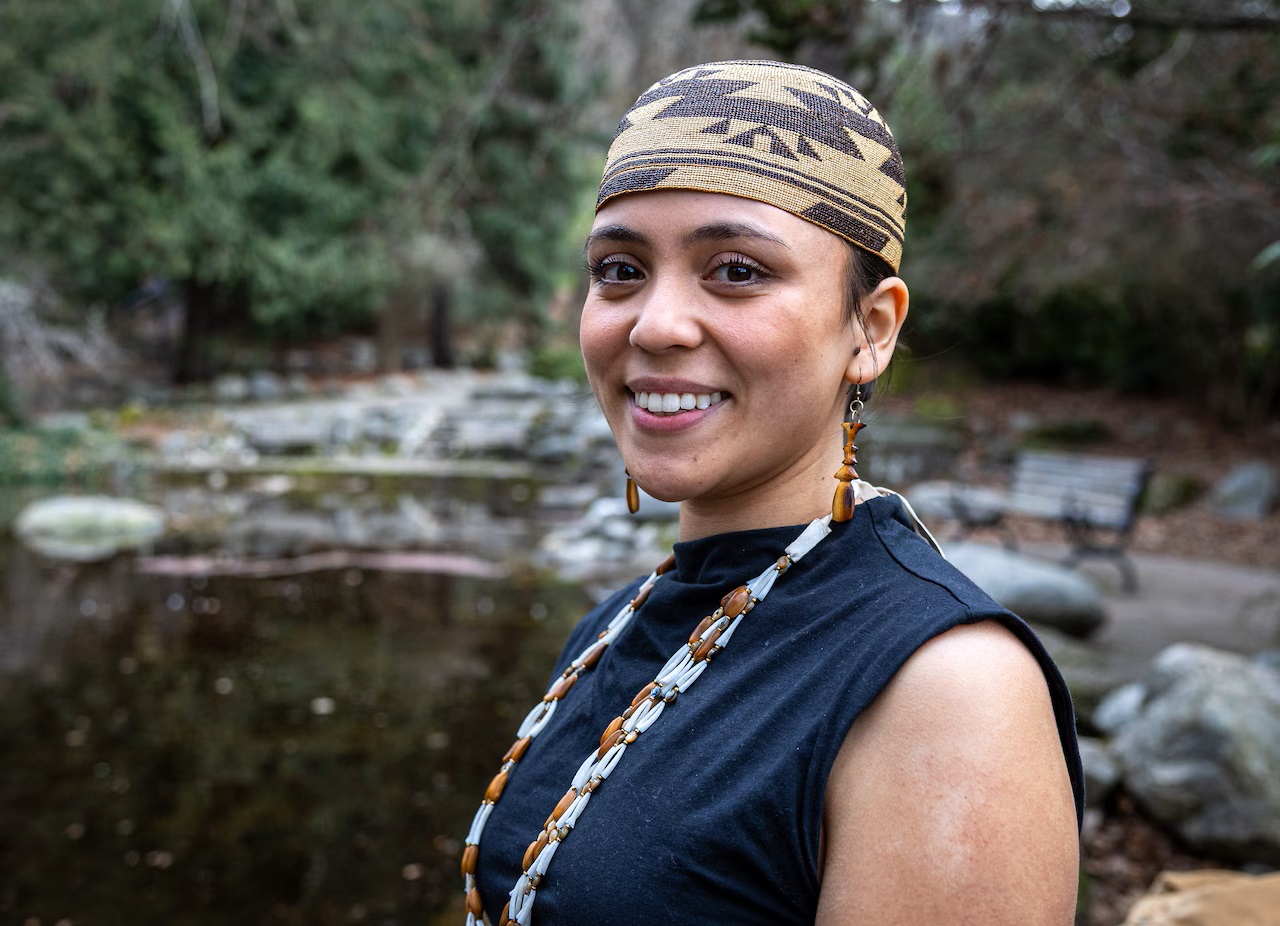
Tuesday, February 1730°F / Moscow, IdahoJanet Eastman Oregonian Keeya Wiki, seen in Lithia Park in downtown Ashland, Ore., kayaked the undammed Klamath River in 2025 with other Indigenous teens through Rios to Rivers’ Paddle Tribal Waters program.Ashland High School student Keeya Wiki kayaked 310 miles on the Klamath River last summer, from its start east of the Cascade mountains of Oregon to where the river meets the Pacific Ocean in Northern California.The historic first descent of the newly undammed Klamath River by Indigenous teens captured the world’s attention and launched Keeya into the spotlight. The 17-year-old has appeared on CNN and the Kelly Clarkson Show, and in November, she went to Brazil to serve as a delegate at the United Nations climate conference.Before Keeya could spend 30 days paddling from the Klamath River’s source to the sea while maneuvering narrow passages of class-four rapids, she had to learn to kayak and become comfortable on the water.Young people Keeya’s age only knew the Klamath River as dammed and unhealthy. Four hydroelectric dams had blocked once-abundant salmon runs for a century. Logging, mining and development also affected the ecosystem.In 2002, a federal order diverted more water from the Klamath River to farmers and ranchers just as salmon were spawning. The decision resulted in the largest salmon die-off in the western United States.The preventable disaster forever changed the Klamath River, say Keeya’s family and her Yurok community, which sees the river not as a resource but a relative.“I come from a beautiful place and a beautiful family of hard workers,” said Keeya, who is of Yurok and Māori descent. “We know what’s right, and we know we have the capacity to make the world better.”She added that in everything she does, she’s motivated by lessons she’s learned from her family.Her father, Reweti Wiki, is Māori from New Zealand. His Polynesian sense of adventure informed Keeya’s willingness to explore and dream big.Her mother, Geneva Wiki, who is Yurok, guided Keeya to have a plan. Geneva’s side of the family, whose ancestral home village is Rek-woi at the mouth of the Klamath River, holds inherited, sacred responsibilities to maintain the balance of the natural world, particularly concerning the Klamath River.“With that comes real certainty about where you belong and what your responsibilities are,” Geneva said. “We have always tried to lead our family with the values to choose love over fear.”Starting at 15, Keeya spent weeks at a time away from her Ashland home and her family training for the river journey. Their lessons have prepared her for the attention that followed, she said.“I am standing on the shoulders of my family,” said Keeya. Family traits Leadership and conviction are family traits.Keeya is the niece of Susan Masten, former Yurok tribal chair, past president of the National Congress of American Indians, and the president and co-founder of Women Empowering Women for Indian Nations.Keeya is also the niece of Amy Bowers Cordalis, who as a University of Oregon student in 2002 decided after the salmon die-off to learn to defend her family’s rights in court.Cordalis, an attorney who lives in Ashland, has since been devoted to protecting the rights of Indigenous people and the natural and cultural resources that are part of their identity and sovereignty.For years, Cordalis represented the Yurok Tribe in the Klamath River dam removal agreement with Berkshire Hathaway Energy, owner of the dam operator, PacifiCorp.In 2020, Cordalis and other representatives of Native American communities told the energy holding company’s executives they would never stop fighting for the river’s restoration.The meeting took place at Blue Creek, one of the most important tributaries on the Lower Klamath River and a salmon sanctuary with spiritual significance, recently returned to the Yurok Tribe.In the end, the $550 million agreement to remove the aging dams cost less than upgrading them to meet modern environmental standards.Crews dismantled the last one of four Klamath River Hydroelectric Project dams in August 2024. A month after the world’s largest dam removal project was completed, thousands of salmon, a cornerstone species for overall ecological health, began repopulating in the Klamath River.In Cordalis’ acclaimed memoir, “The Water Remembers: My Indigenous Family’s Fight to Save a River and a Way of Life,” she writes of her family’s multigenerational work to protect the Klamath River and their legal successes to preserve the Yurok people’s sustainable relationship with nature.“Keeya, along with my boys, will be the first generation of my family, since the arrival of white people, with the privilege to simply enjoy a healthy river and not have to fight,” Cordalis wrote in her 2025 book. “This is freedom. It may not be the freedom my great-grandmother enjoyed, but it is still a beautiful freedom.” International teachers Keeya and the other young kayakers physically prepared for their descent of the Klamath River through the Paddle Tribal Waters program, a multi-week beginner program in kayak and river advocacy training created by the nonprofit Ríos to Rivers.Weston Boyles founded the nonprofit in Colorado to help Indigenous and underserved youth reconnect with their ancestral waterways and develop skills to be lifelong stewards of their culture and the environment.The organization, founded 14 years ago, has grown to have a base in White Salmon, Washington, and the Klamath Basin.In 2024, Keeya and the other eighth- through 12th-grade kayak students flew to Chile to spend six weeks training on the Biobío River while earning high school credit.In the morning, they were enrolled in a full load of Indigenous-informed, academic classes offered by the accredited World Class Academy. In the afternoon, they were taught whitewater kayaking and river safety by Paddle Tribal Waters instructors.The Klamath River kayak group also trained for seven weeks in spring of 2025 in the Northwest, practicing in the McKenzie, Salmon, Smith, Trinity and the Klamath rivers.Then the young kayakers faced the big day.On June 12, 2025, the well-trained kayakers received a ceremonial sendoff by their elders and tribal leaders before embarking on their 30-day journey downriver.William Ray Jr., chairman of the Klamath Tribal Council, said at the time in a news release that the most important part of the historic event “is the connection to not only our sacred lifeblood, our water, our ‘ambo,’ but also with the connections of people, both young and old, and the connections that we have as Indigenous people with one another” from the upper to the lower Klamath River.Family members and friends were at the sendoff, and along the journey, people passing by the river recognized the stream of youthful riders in colorful kayaks and waved their support.The core group of young kayakers was from the Klamath, Yurok, Karuk, Quartz Valley and Hoopa Valley, Warm Springs and Tohono O’odham tribes.On the second half of their journey, they were joined by more than 180 others, including Indigenous youth and representatives from the Snake River and other U.S. river basins.Members of kayak clubs from Chile and Bolivia, where dams threaten the health of their rivers, also joined in what Boyles called an International flotilla.On July 11, the flotilla was escorted by family and friends in redwood dugout canoes to the sand spit adjacent to the Klamath’s mouth, and the years-in-the making dream was realized.A celebration took place the next day in the nearby town of Klamath, California, the administrative capital for the Yurok Tribe.The day included the start of a two-day international Free Rivers Symposium organized by Boyles, to “shape decisions that affect the future for us all.”Tribal leaders, environmental activists, scientists and other experts reported on the ecological, economic and cultural damage caused by large dams and hydro-power projects.An international delegation of experts and organizations from multiple river basins in the United States as well as Chile, Bolivia, New Zealand and China also presented information about threatened watersheds, according to organizers.On July 13, 2025, the first-ever Klamath River Accord was signed, calling for the removal of harmful dams around the world and the end of construction of new ones.The document’s preamble, conceived and written by Indigenous youth, “recognizes these dam removals on the Klamath River serve as a model for future climate resilience efforts.”The signers delivered specific demands directed at global leaders to the United Nations and other decision-making bodies to protect free-flowing rivers, support river restoration, and uphold Indigenous rights.The Free Rivers Symposium was hosted by the Yurok Tribe and sponsored by Ríos to Rivers and the nonprofit Cordalis co-founded, Ridges to Riffles Indigenous Conservation Group.Symposium sponsors also included the Water Climate Trust, Save California Salmon and Rivers For Climate Coalition.Boyles said tribal adults have been working for a long time to have the dams removed, but he focused on training youth, age 13 to 20, with ancestral rights in the Klamath Basin. By bringing them together, he said, “they can take on challenges that are oftentimes forced upon them from the outside.”Boyles said the Paddle Tribal Waters program supports the sovereignty of the Klamath Basin Tribal Nations by ensuring that more of their youth have a voice and feel empowered to create tribally led river programs in their communities.His group produced short films of the journey as an opportunity for the students to speak at film festivals and join the global push to protect free-flowing rivers.“It’s really unfortunate that young people have been saddled with these burdens,” Boyles told The Oregonian/OregonLive, “but a lot of amazing work has been done by young people.”He said they can successfully speak about the state of the rivers thro
Share this story