eladelantado.com
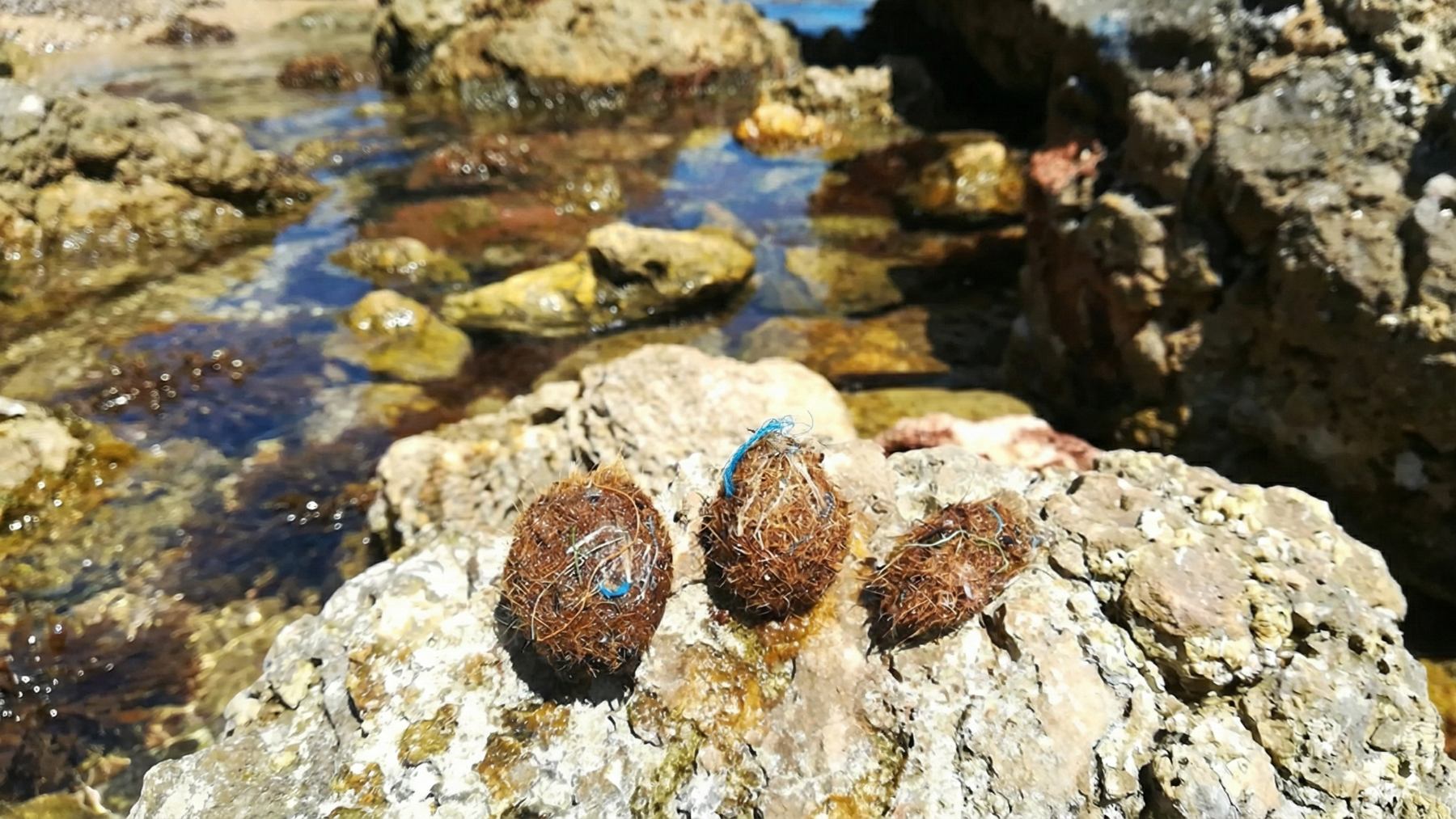
Goodbye to the idea that plastic always ends up in the open sea the Posidonia oceanica seagrass meadow in the Mediterranean acts as a natural filter , trapping millions of microplastics
eladelantado.com · Feb 15, 2026 · Collected from GDELT
Summary
Published: 20260215T191500Z
Full Article
A recent study discovered that underwater fields of a specific Mediterranean seagrass seem to snag plastic trash that would otherwise float out to the open water and dirty the ocean floor. This plant, called Posidonia oceanica, grows into huge, thick underwater lawns in the mild waters of the Mediterranean, reaching depths of about 40 meters (130 feet). While collecting samples on the Spanish island of Mallorca in 2018 and 2019, scientists from the University of Barcelona realized that the plants twist themselves into natural fiber clumps. These shapes are called “Neptune balls,” and they do a good job of grabbing onto plastic garbage. Trapping Millions of Microplastics as if It Were a Sieve Because of its long, flat leaves, P. oceanica likely snags close to 900 million items of plastic trash every year completely on its own, according to the researchers’ findings released on January 14 in the journal Scientific Reports. They spotted plastic waste in 50% of the loose grass samples they checked, finding as many as 600 pieces for every kilogram of leaves. Plus, while only 17% of the Neptune balls held plastic, the concentration was much stronger there—almost 1,500 fragments per kilogram of the ball. Anna Sanchez-Vidal, the lead author and a marine biologist at the University of Barcelona, told the press that they were already aware the balls snagged plastic, but they never anticipated finding such huge amounts packed into the natural fibers. Coastal Barriers Against Pollution Sanchez-Vidal added that while investigations into microplastic waste have historically concentrated on what piles up on the surface or the deep ocean floor, increasing proof indicates that coastal environments might be key in snagging plastics as they move away from the shore. This isn’t the first time a discovery has drawn attention to how well coastal seagrasses filter out pollution. In February 2020, a team of researchers in China led by Yuzhou Huang put out a study in Science Direct revealing that a different seagrass variety, Enhalus acoroides, performs a similar trick. Meadows of this plant near the coast of Hainan province in southern China were observed catching microplastics at levels ranging from 80 to 884 particles per kilogram. How the System Works On Mallorca, storms often push these plastic-filled clumps onto the beach, usually during the fall and winter months. The researchers noted that when the water is peaceful, the balls just stay on the bottom of the ocean. They point out that we don’t know yet if catching all that plastic actually hurts the plants. Sanchez-Vidal mentioned that our grasp of how plastic moves around is still patchy, so we need more research to figure it out. An Endangered Ecosystem This discovery gives us another reason to protect seagrass meadows around the world for the sake of our oceans and coasts. We already know these plants clean the water, lock away carbon dioxide, and provide a safe place for young fish to grow and hide. Seagrass meadows everywhere face dangers from climate change, invasive species, pollution, erosion, and physical destruction caused by dredging, trawling, and dropped anchors. It is estimated, for example, that P. oceanica covers only half the area it occupied in 1960. The most recent numbers suggest these meadows now span a total of about 1.2 million hectares (3 million acres). Yet, while the meadows are disappearing, the volume of plastic trash pouring into the Mediterranean keeps increasing. According to a 2018 WWF report, the European summer vacation rush sends roughly 150 million metric tons of plastic into the sea in just a few short weeks. “With the load of plastic reaching our oceans constantly rising, seagrass ecosystems like P. oceanica meadows are going to be essential to battling the everpresent microplastics,” Sanchez-Vidal observed.
Share this story