kathmandupost.com
Geopolitics of Nepal elections
kathmandupost.com · Feb 23, 2026 · Collected from GDELT
Summary
Published: 20260223T030000Z
Full Article
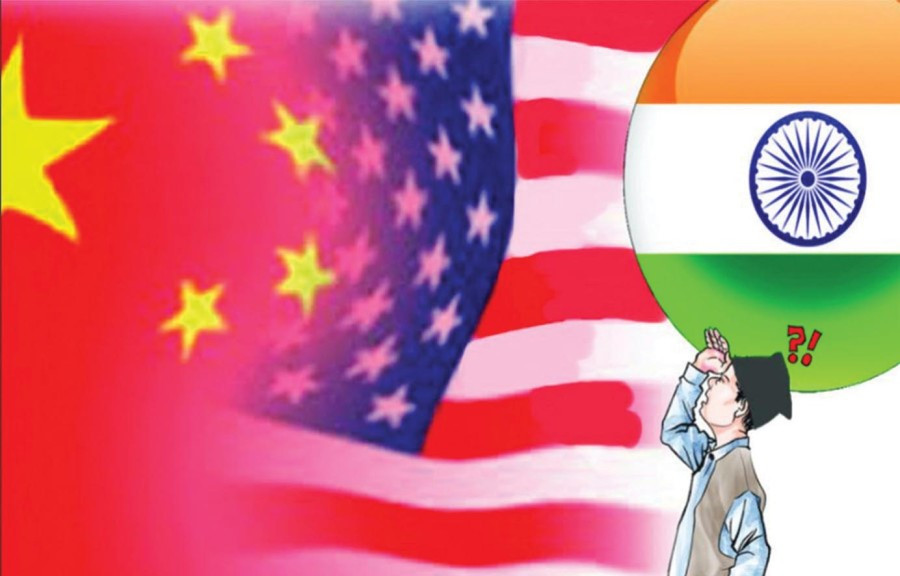
During the 2025 Gen Z uprising, conspiracy theories about the protests being sponsored by ‘American NGOs’ were doing the rounds online. Others attributed the early-September unrest to India, which had never liked KP Oli, the then prime minister who was unceremoniously chased away from office. Much of the talk was speculative, but it reflected a deeper scramble for influence in Kathmandu. As the country gears up for a historic election being held against the backdrop of the Gen Z uprising, foreign powers are looking to secure their interests. This is hardly surprising in a country precariously sandwiched between India and China and where the interests of its ‘third neighbour’, the US, are steadily growing. The post-election domestic politics could further encourage foreign meddling. Begin with India. The only certain thing is that it does not want to see Oli return as prime minister. In any case, following the Gen Z uprising, Oli’s star has been dimming and his CPN-UML is unlikely to get many seats in the elections—much less a majority. If so, it will be a straight shootout between Gagan Thapa of the Nepali Congress and Balendra Shah of the Rastriya Swatantra Party for the post of prime minister.Thapa comes from a party that has historically had warm ties with New Delhi. Over the years the Congress has acted as an antidote to the China-tilt of Nepali communist parties. Conveniently for India, the Congress is sceptical of Nepal-China commercial ties, particularly over lending for the BRI projects. The same attribute makes the party palatable to the Americans and other Western powers. Having been in politics for so long, Thapa is a known quantity. Predictability is a valued asset in diplomacy. Compared to him, working with the more volatile Balendra Shah could be trickier. Responding to Shah’s infamous F-bomb-laced midnight Facebook post directed, among others, at the three big powers, one Kathmandu-based Western diplomat expressed his scepticism of being able to work with the ex-rapper: “He is a bit of a loose cannon, isn’t he?”Much to India’s chagrin, Shah once displayed the map of ‘Greater Nepal’ in his office while he was Kathmandu’s mayor. He also led efforts to ban some Indian films from Nepali screens. Yet the same Shah also turned down an invitation to visit China after the latter ignored Nepali sensitivities while updating its national map. It also helps Shah’s cause that he has cultivated an image of a ‘doer’ who is more focused on getting results than on maintaining ideological purity. This could make it easier for him to project his government’s foreign engagements in business terms. Yet this effort can go only so far in a region that is witnessing a troubling tussle between big powers that increasingly want exclusive relations. For instance, if Shah is to have amicable long-term relations with the Indians, he will be expected to maintain a safe distance from Beijing. China, in turn, would look to the ‘business-like’ Shah to engage it in commercial terms. The Americans, meanwhile, would lean on him to stay away from Chinese ‘predatory lending’. Having cultivated an image of an ardent nationalist in the image of King Mahendra, Shah will be expected to follow in the late king’s footsteps and carefully calibrate the role of foreign powers. The problem for the ex-mayor is that he does not have the authority of the absolute monarch, nor is the current geopolitical landscape conducive to such careful balancing. Then there are domestic concerns that will weigh heavily on geopolitics. For instance, even if the RSP gets a majority, it is far from certain that Balendra Shah will become the prime minister—or even if he does, he will serve in the post for long. There is a bitter tussle for supremacy in the RSP between Shah and Rabi Lamichhane, the party chair. Many older members of the party are yet to embrace Shah, a newcomer who has made no contribution to building the party organisation. Party insiders already speak of an imminent split after the election. This internal power tussle in the RSP would have big consequences in national politics. And if no party gets an absolute majority, then there could well be a repetition of the game of musical chairs that contributed to the Gen Z uprising. This in turn will also open up ample space for foreign powers to meddle. Whether it is Shah or Thapa or even Oli who is the next prime minister, Nepal’s calibration with China, a vital cog in Nepal’s ‘balance of power’ diplomacy, could be difficult. The Indian and American positions on India’s role in South Asia seem to be converging. As the new US Assistant Secretary of State for South and Central Asian Affairs Samir Paul Kapur recently said while briefing a US House subcommittee about elections in Nepal and Bangladesh, “We are trying… to prevent China or any single hegemon from taking over or imposing coercive leverage on the region.” He argued that India’s strategic autonomy works to Washington’s advantage: “An India that can be independent and preserve its freedom of action, takes a huge swath of the Indo-Pacific off of China’s plate and almost by definition prevents it from becoming the dominant power in the region.”Perhaps it is because China (rightly or wrongly) sees the Nepali Congress and even the new RSP doing India’s bidding that it will continue to look to cultivate communist parties in Nepal. Yet the curious thing is that before he was forcibly removed from power, Oli had made a concerted effort to regain India’s confidence. Realising the importance of India’s backing for his government, he was also ready to distance himself from China. Yet the Indians would trust him no more. So the communists’ return to power in Nepal is no guarantee of better ties with China. Nepal’s next elected government, whoever leads it, will have the unenviable task of managing India’s anxieties about external influence in its traditional backyard, allaying China’s suspicions of American ‘encirclement’, and reassuring the US that Kathmandu won’t drift into Beijing’s orbit.
Share this story