washingtonexaminer.com
FDA moves to facilitate personalized therapies for rare diseases
washingtonexaminer.com · Feb 23, 2026 · Collected from GDELT
Summary
Published: 20260223T194500Z
Full Article
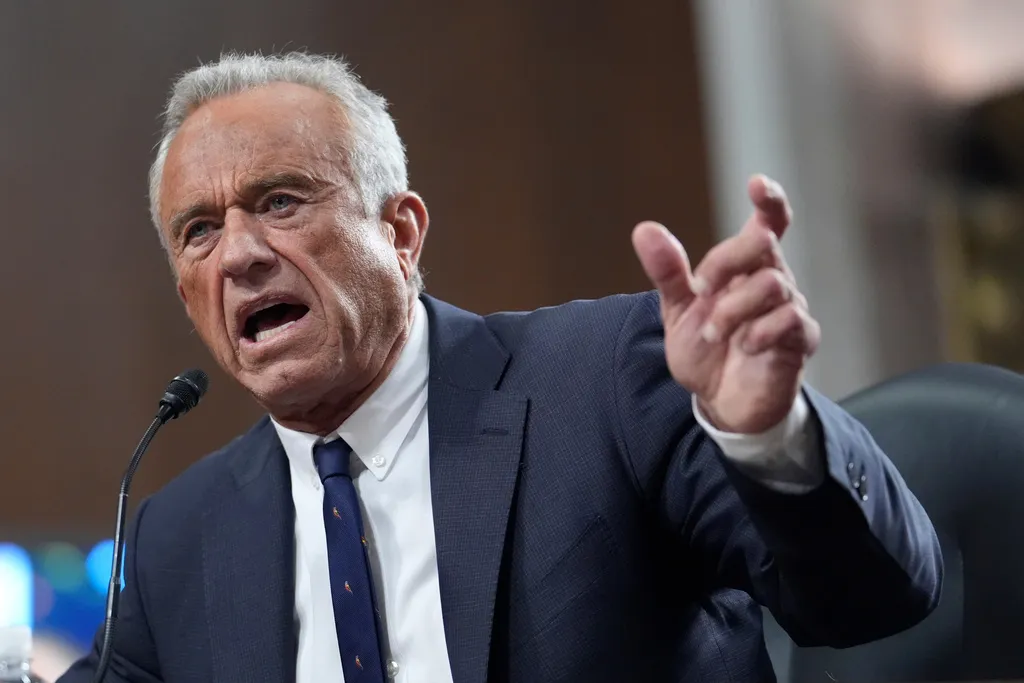
The Food and Drug Administration is making it possible for pharmaceutical companies to produce bespoke medicines for individual patients, an effort to revolutionize the standard of care for rare diseases. Trump administration officials announced on Monday new draft guidance from the FDA that would update approval standards for personalized genetic medicines, creating a new approval pathway for therapies targeted to patient groups too small for traditional clinical trials. More than 10,000 rare genetic disorders affect more than 30 million people in the United States, approximately 1 in 10. About half of these patients are children, according to the FDA. Traditional clinical trials are designed for diseases that affect large populations, historically making pursuing treatments for rare diseases unprofitable for pharmaceutical companies. The proposed new rules offer drugmakers clearer guidance on developing genome-editing and RNA-based drugs, meaning ones that can target diseases or conditions caused by a patient’s unique genetic mutations. The protocol requires companies to justify why randomized trials are not feasible and collect real-world evidence after approval to monitor safety and efficacy. “When biology is clear and the science is sound, we will evaluate therapies based upon strong evidence and not arbitrary barriers,” Health and Human Services Secretary Robert F. Kennedy Jr. said during the announcement event on Monday. “Individualized medicine is no longer theoretical.” RFK JR. TOUTS MAHA’S PLANS FOR YEAR 2 Kennedy said the project was launched following the successful treatment of Baby KJ, an infant with an ultra-rare enzyme deficiency who received the first-ever gene editing therapy through the Children’s Hospital of Philadelphia. Research physician Dr. Kiran Musunuru with the Children’s Hospital of Philadelphia, who cared for Baby KJ, explained during the event that gene-editing technology essentially corrects a misspelling in the genetic code of the patient. Musunuru said that Baby KJ suffered from “one deficiency caused by misspelling unique to him in one of his genes in his liver.” He said that, thanks to funding from the National Institutes of Health and in close coordination with the FDA, he and his team were able to “correct his unique misspelling, turn the broken gene in his liver back on and make him healthier.” “For decades, families heard the same thing: ‘There are not enough patients, the approval will take too long, you just have to wait for the science to catch up with your child,’” Kennedy said. “That ends today.” Judy Stecker, a communications staffer at the HHS and mother to a son with a rare genetic disorder, spoke about the difficulties of finding a treatment for her son, Wheeler. “Families like mine have watched these scientific breakthroughs outpace our ability to get life-saving treatments to our children, because regulations have simply not kept pace,” Stecker said. “But today, that is beginning to change.” She said the new regulatory framework “creates a commercially viable path to deliver hope, not one child at a time, but at scale, and lead the world in genetic medicine.” FDA Commissioner Dr. Marty Makary said only 12 drugs had been approved by the FDA since 2011 using the agency’s standards for real-world evidence. Makary told pharmaceutical companies looking to pursue rare disease therapies to “submit whatever you want” with respect to real-world evidence to demonstrate the product’s efficacy. “If it’s not good evidence, we’ll let you know, but at least allow drug developers to submit the experience in the real world,” Makary said. RFK JR. TOUTS MAHA’S PLANS FOR YEAR 2 Dr. Tracey Beth Hoeg, the FDA’s director of the Center for Drug Evaluation and Research, said the FDA approval pathway is not limited to gene editing but “leaves it open to other types of treatment” as well.
Share this story