scroll.in
Clustered Story
Dhaka diary : The fresh smell of elections
scroll.in · Feb 15, 2026 · Collected from GDELT
Summary
Published: 20260215T061500Z
Full Article
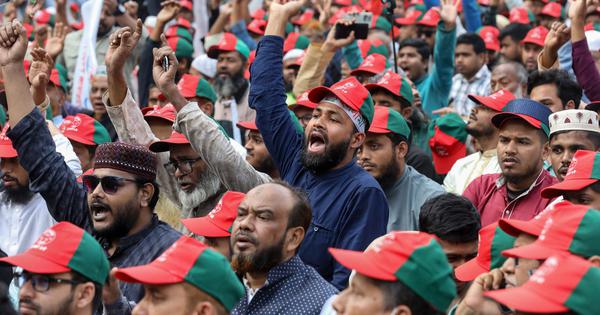
“Politics” is often a negative word the way we use it. But to be in Dhaka on the eve of the elections made me realise just how vital it is.After more than a decade, Bangladeshis saw their first free and fair election. The Awami League’s Sheikh Hasina might have had many virtues, but conducting fair polls was not one of them. As a result, Dhaka was buzzing with energy when I landed to cover the elections. For many Bangladeshis, this would be the first time in their lives that they were voting.At a cramped Chittagononian eatery, my table was right next to a young couple whose entire conversation revolved around the elections. Both of them agreed whom to vote for (the now-centrist Bangladesh Nationalist Party) but differed on the role of the interim government that has run the country since Hasina fled to India in August 2024 (the lady was far more critical).My cab driver when I was in Dhaka, on the other hand, was a strong Jamaat supporter. Like many young urban men, the many years of non-politics had moved him to the right. But he was crestfallen that his boss would not give him leave to go back home to the village to vote.Older Dhakaites often saw through the Jamaat. Another man to whom I spoke, ironically named Ayub Khan – also the Pakistani Army dictator who was so hated in what was then East Pakistan that a mass uprising forced him to resign in 1969 – was a fervent supporter of Hasina. “The country won’t run without the Awami,” he declared passionately.As it so happens, I was on my way to meet a member of the interim government and part of Khan’s pro-Awami rant was delivered inside a compound that housed government ministers. When I gently suggested he speak a bit more softly (reports of Awami workers being arrested were widespread), he was having none of it. “Have I done anything wrong?” he shouted ever more loudly. “I can have any political opinion I want.”At a house dinner in one of Dhaka’s posher areas, there was optimism about the elections. The conversation turned to the brutal repression during the July 2024 uprising. One guest had literally seen a person being shot dead. The Awami League was once the party of Bangladesh’s elite. Yet, it was clear that Hasina had lost this crowd. Now they looked to Tarique Rahman – both to keep away the Jamaat and also to prevent what they saw as an unequal relationship with India during Hasina’s tenure.In spite of this enthusiasm, there was caution too. Bangladesh has a violent political history and no one wanted to be caught on the wrong side after February 12, result day. For me as a journalist, this made things especially difficult. Getting people to talk to me, especially on the record, was tough.The fact that I was Indian made it tougher. People especially did not want to be caught on the wrong foot in an Indian publication given it could be doubly weaponised maliciously in the future. I understood their caution. Just a couple of months ago, mobs had burnt down newspaper offices and cultural centres using the bizarre accusation that these places leaned towards India.Bangladesh had a strikingly peaceful election on February 12. Dhaka will be keeping its fingers crossed that the country can keep this calm going.Read Scroll’s ground reports from Bangladesh here.Here is a summary of last week’s top stories.The transnational assassination plot. An Indian citizen accused of being involved in the murder-for-fire plot against a Khalistani separatist in New York pleaded guilty. Nikhil Gupta pleaded guilty to three charges, including the conspiracy to murder-for-hire and money-laundering.The US Department of Justice has accused Gupta of conspiring with an Indian government official to kill Khalistani separatist Gurpatwant Singh Pannun. Gupta had paid $100,000 in cash to a hitman to assassinate Pannun, the US prosecutors alleged. The hitman turned out to be an undercover US federal agent.The plot was part of a larger conspiracy to kill several persons in California and Canada, the justice department alleged.New Delhi denied involvement in the alleged plot but constituted a high-level committee to examine the inputs provided by the US.The national song in its entirety. The Union home minister directed that all six stanzas of the national song Vande Mataram be sung first when it is played together with the national anthem Jana Gana Mana.Only the first two stanzas of the song have been played at official functions so far. The remaining stanzas, which invoke Hindu goddesses Durga, Lakshmi and Saraswati, had been omitted.Speaker vs the Opposition. The Opposition submitted a motion indicating its intention to move a no-confidence motion against Lok Sabha Speaker Om Birla. Signed by about 120 MPs, the notice cited Birla’s “blatantly partisan manner” of conducting proceedings in the House and said that “leaders of Opposition parties have just not been allowed to speak” on several occasions.Defamation case. A magistrate court in Gujarat’s Gandhinagar convicted journalist Ravi Nair in a criminal defamation case filed by Adani Enterprises about a series of social media posts and sentenced him to imprisonment for one year.The case pertained to tweets by Nair between October 2020 and July 2021 about the Adani Group, including allegations made by United States short seller Hindenburg Research and a strike against the proposed privatisation of the Jawaharlal Nehru Port Trust.The conglomerate’s flagship firm had alleged that the posts by Nair contained false and defamatory statements intended to damage its reputation. It had alleged that the journalist’s comments did not amount to legitimate criticism but were designed to undermine the credibility of the company in the eyes of the public and investors.The Assam plan. The Supreme Court allowed a mechanism proposed by the Assam government to clear alleged encroachments in forests. The bench said that the course of action to be adopted “contains sufficient procedural safeguards”.Residents of villages in the state’s reserved forests had moved the court after receiving eviction notices that alleged that they had illegally occupied the land. They argued that their families had lived in the villages for more than 70 years and that they had been issued identity documents by the state.Chief Minister Himanta Biswa Sarma described the Supreme Court’s ruling as a “historic victory” of the Assam government, saying that it streamlined the process to evict alleged encroachers.Also on Scroll last weekShehla Rashid is now a college teacher in Kashmir: ‘Democracy cuts everyone down to size’From JNU night meetings to Kunal Kamra podcast, how Anirban has kept the conversation goingFrom JNU to Congress, Kanhaiya shrugs off contradictions: ‘Will be proven right 50 years later’Watch: Scroll Adda with Snigdha Poonam: India’s scam epidemicThe roots of India’s disinterest in readingHow podcasts are reshaping Assam’s politicsGig worker strike shows what’s holding back labour organising in IndiaWatch: Labour codes for whom? Workers or corporations?‘O’Romeo’ review: A same-old yarn about swaggering gangsters and bloody revenge‘Kohrra 2’ review: Gripping and suspenseful, but the edge is missingFollow the Scroll channel on WhatsApp for a curated selection of the news that matters throughout the day, and a round-up of major developments in India and around the world every evening. What you won’t get: spam.And, if you haven’t already, sign up for our Daily Brief newsletter. We welcome your comments at letters@scroll.in. Member Exclusive Slow Lane Bangladesh Bangladesh elections
Share this story