therealdeal.com
Deep Dive on Cook County Assessor Candidates
therealdeal.com · Mar 2, 2026 · Collected from GDELT
Summary
Published: 20260302T144500Z
Full Article
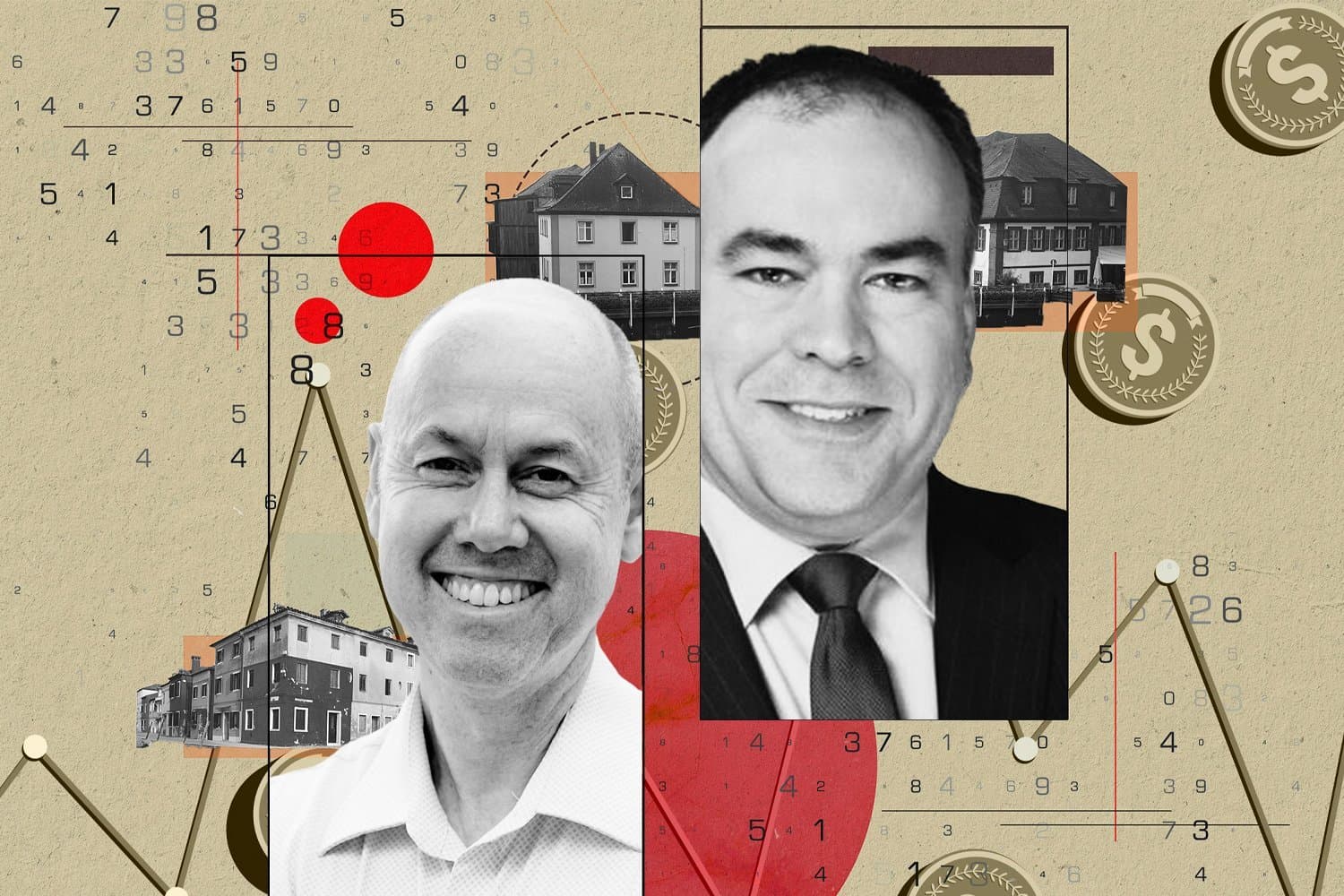
If campaign attacks are to be believed, Chicago’s next tax assessor will either be an incompetent incumbent dead-set on driving investment away from Cook County or a wolf in sheep’s clothing who will bring back a level of corruption that would revive the city’s reputation as a hub of machine-style politics.Though the tax assessor’s race may get overlooked by the average voter, the real estate industry is paying attention, approaching the upcoming Democratic primary for this Cook County position with a level of intensity, exaggeration and campaign donations from big-name developers typically reserved for a position with broader reach.So how did tensions get so high in a race between two men who each give off the vibe of a khaki-wearing accountant?The answer goes back to the assessor’s role in divvying up a growing property-tax burden among an ever-changing base of taxpayers.Almost as soon as incumbent Fritz Kaegi took office in 2018, Chicago’s top commercial real estate players started complaining that Kaegi’s assessments were fluctuating wildly and were impossible to predict or plan around. Although property taxes annoy owners everywhere, a steep dropoff in development in Chicago gives the recent crescendo particular merit.Industry insiders claim lenders now make deals on an “ABC” basis, which stands for “anywhere but Cook County.”Sterling Bay’s 53-acre Lincoln Yards development site along the Chicago River has officially sold off to new developers after the firm faced a myriad of obstacles, including a lack of financing. Related Midwest’s massive downtown-adjacent parcel known as The 78 has sat vacant for years and was only brought back to life by a privately funded soccer stadium proposal. The public-private megadevelopment along the South Side called Bronzeville Lakefront is years behind schedule as financing efforts fall short.It’s not just megadevelopers struggling to raise capital. This year, Chicago is on track to deliver the lowest number of new multifamily units since 2012, a forecast from Marcus & Millichap found, even though rent is growing at higher rates than anywhere else in the country — typically a signal for developers to add supply.Kaegi’s challenger is Patrick Hynes, who claims he is running to open a floodgate of investment that has been waiting to burst for years and has the endorsement of the Cook County Democrats, in a rare snub for the incumbent.Hynes worked at the Cook County assessor’s office for two decades and is the current assessor for south suburban Lyons’ Township, a subset of Cook County. He’s pitching himself as the candidate who can issue accurate assessments and return a sense of certainty to lenders and investors.As a result, he has raked in campaign donations from some of the top real estate names in the city.But being too closely associated with the real estate community comes with baggage. Several members of the former assessor and Cook County Democratic Party head Joseph Berrios’ administration wound up on probation for federal conspiracy charges for accepting bribes from property tax attorneys.Hynes’ solution to unpredictable taxation is to expand the tax base. His platform hangs on the idea that if more development and investment comes to town, there will be more property owners to split the county’s tax bill and help lighten the load for everyone.Kaegi claims that Hynes’ approach would reestablish the same pay-to-play environment where, for every property owner who gets a sweetheart deal, another takes on more of the tax burden.Hynes says Kaegi is presenting a false choice and argues the race isn’t about corruption versus reform but simply about competence versus incompetence.The candidatesHynes seems to present the image of a public servant in its purest form, almost like a Boy Scout all grown up. The son of a firefighter, Hynes went into public service, too, with the bulk of his career spent at the Cook County assessor’s office. He is a volunteer firefighter and was elected head of the Lyons Township Assessor’s Office in 2021.Beneath a folksy demeanor is an intimate knowledge of Democratic machine politics. Hynes’ uncle, Thomas Hynes, led a decadeslong political career including as Cook County Assessor and president of the Illinois Senate. His cousin, Dan Hynes, was Illinois comptroller from 1999 to 2011. Another cousin, Matt Hynes, was former Mayor Rahm Emanuel’s chief lobbyist. “The fact that the assessments of office buildings are continuing to increase with no acknowledgment of the impact of the pandemic doesn’t seem objective.” Farzin Parang, Building Owners and Managers Association of Chicago Now on the defense, Kaegi’s campaign is painting Hynes’ deep political ties to the state’s notorious history of government corruption, though his family members specifically haven’t been involved in scandals.Kaegi grew up on the South Side of Chicago with a father who was a professor at the University of Chicago. He positioned himself as a reform-minded political outsider when he first ran for office in 2018 but he certainly wasn’t an underdog.Armed with an MBA from Stanford and decades of experience as a financial analyst and mutual fund manager, his campaigns have enjoyed an infusion of funding from his personal fortune. Growing up in Hyde Park was a lesson in contrasts, he tells voters. Despite his success in the world of finance, he left to enter public service in hopes of improving the lot of those he grew up with.The campaignsWhen Kaegi was first elected, he pledged not to take any campaign donations from property tax attorneys and to establish a code of ethics for the office.Property tax attorneys were given an unwelcome spotlight in 2024, when former Alderman Ed Burke, one of Chicago’s most influential political figures, was sentenced to prison after being convicted of 13 felony counts including racketeering, extortion and bribery. (He got out in 2025.) Burke blurred the lines between his role as a property tax appeals attorney and Chicago City Council’s longest-serving member in history.But since then, highly publicized missteps have threatened Kaegi’s base of support.When the pandemic decimated the office market, many in the real estate industry saw Kaegi’s assessments of struggling commercial properties as unfairly optimistic.“The fact that the assessments of office buildings are continuing to increase with no acknowledgment of the impact of the pandemic doesn’t seem objective. It’s not consistent with what’s happening in other markets or what’s happening in our market,” Farzin Parang, executive director of the Building Owners and Managers Association of Chicago, said when the latest downtown assessments were released last year.An independent study commissioned by Cook County found wide gaps in values set by Kaegi’s office and the Board of Review, which hears appeals. As Kaegi’s appraised values went up, so did the rate of appeals — from nearly everyone. About 97 percent of properties worth more than $5 million in central Cook County, which includes the urban core, appealed to the Board of Review in between 2020 and 2022. Of those, 88 percent were granted a reduction.Kaegi also focused on shifting the county’s tax burden from residential taxpayers to commercial taxpayers.When Kaegi’s assessments of the urban core came out last year, a summary report stated that “because commercial property increased in value by more than residential property, homeowners saw their share of the tax base drop from 51 percent to 49 percent.”But his assessments didn’t stick. Property owners’ appeals to the Board of Review ended up lowering the commercial sector’s overall share of the tax burden and low-income homeowners took a hit. One of Chicago’s poorest neighborhoods, West Garfield Park, has repeatedly experienced the steepest increases, with median homeowner bills up nearly $2,000, or 133 percent since 2019, the Cook County Treasurer’s office found. About 97 percent of properties worth more than $5 million in central Cook County appealed to the Board of Review in between 2020 and 2022. Of those, 88 percent were granted a reduction. In some suburbs on the southern end of Cook County, property tax collection rates have plummeted and risk sending the towns’ finances into a death spiral. In 2023, one suburb on the southern end of the county, Harvey, had a 58 percent collection rate, according to the treasurer.While Kaegi blames the Board of Review, whose members are elected independently of the assessor, Hynes blames Kaegi’s methodology.“[Assessments are] not surviving scrutiny, and the reason for that is that we don’t have an assessor that’s producing a credible result. The best way to reduce all the arguing about it is to produce a credible result the first time,” Hynes said.A report from The Illinois Answers Project and The Chicago Tribune found that at least 620 properties recently renovated or newly built were misclassified or undervalued during the 2023 tax year, resulting in an estimated $444 million in missed taxable value. Kaegi’s office confirmed it has worked to add over $400 million worth of previously undervalued properties to the tax roll in 2024 but estimated it only had an impact of about $1 to $2 per tax bill.Hynes’ plan to expand the tax base doesn’t just come from attracting new investment. He also plans to track down more of those undervalued properties. The original investigation noted reporters had likely only found a fraction of the county’s undervalued properties.And he wants to lobby the state legislature to rein in the city’s use of tax increment financing districts, or TIFs, which lock up property tax revenue in specific districts for hyperlocal projects rather than contributing to the county’s overall coffers.Kaegi argues he wants to find missing value as well but notes successful appeals for even a handful of large developments like data centers can wipe out that progress.Instead, he’s campaigning on a plan to follow reforms outlined in an independent
Share this story