vaildaily.com
Climate Action Collaborative : The first step to removing barriers
vaildaily.com · Feb 19, 2026 · Collected from GDELT
Summary
Published: 20260219T033000Z
Full Article
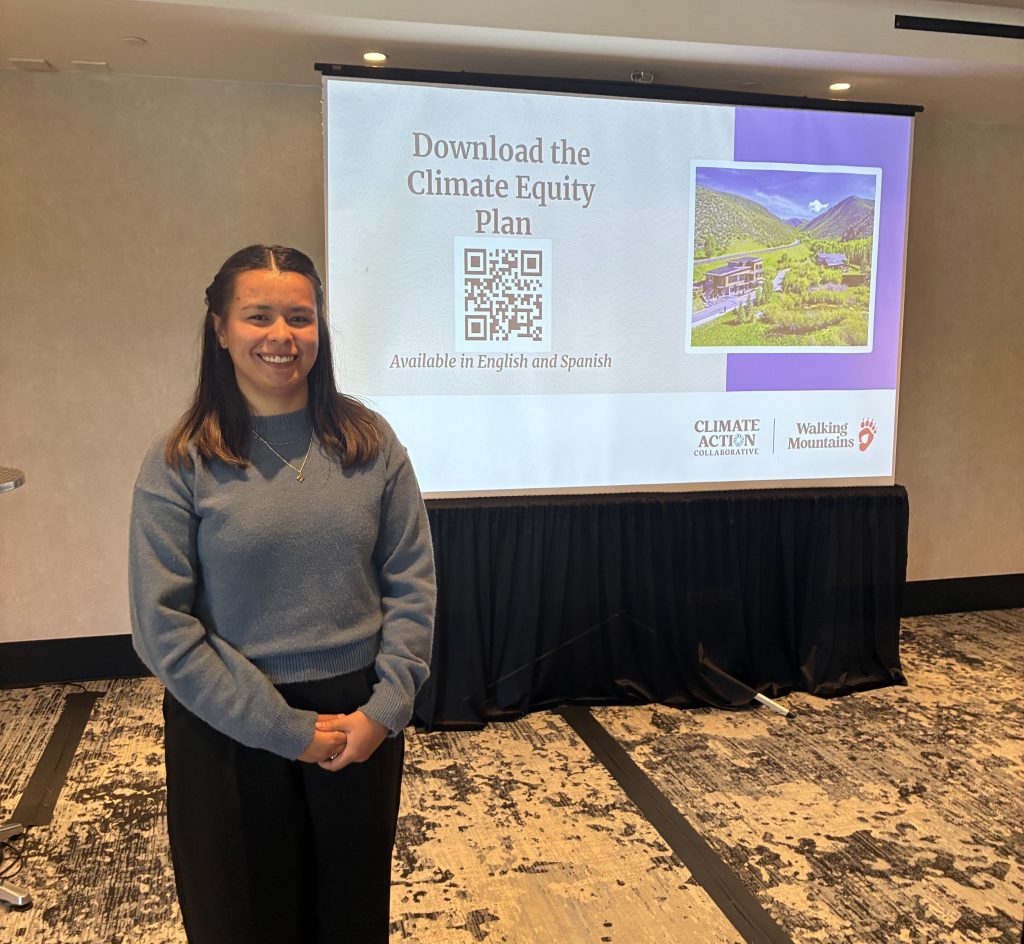
Mady PonceClimate Action Collaborative Walking Mountains Sustainability Programs Coordinator, Mady Ponce, presents the Climate Equity Plan at the Mountain Towns 2030 conference.Courtesy photo In Eagle County, approximately 30% of the year round population and half of the students are Latino. Despite being such a considerable part of our community, Latino and working class residents have historically been overlooked when making local environmental and sustainability decisions. This exclusion not only makes it harder for Eagle County to reach its climate goals, but it places the greatest burden on families who are most vulnerable to rising utility costs, extreme weather, air quality concerns, and housing challenges. To begin closing the gap in engagement and opportunities, Walking Mountains and the Climate Action Collaborative (CAC) received a grant from the Colorado Department of Public Health and Environment to create the Eagle County Climate Equity Plan. The goal of developing the plan was to identify barriers to climate action participation for underserved populations and to make it easier for people to choose sustainable options. This would also require building and strengthening trust between organizations and residents in our community to make efforts more collaborative and inclusive. The first step in developing the plan was to talk to the community so we could understand what our residents know, what resources they have access to, and what limits their ability to participate. We collaborated with partners that have established relationships with the Latino community to distribute a survey across the county in English and Spanish. The survey investigated awareness, behaviors and barriers in four sector areas: buildings and energy, transportation, waste and water. We also invited participants to join focus groups to provide more in-depth insights into their experiences. Using the survey and focus group responses, we learned that many residents expressed a desire to be involved in sustainability initiatives and planning, but cited barriers such as language access, time constraints, lack of information, or feeling excluded from decision-making processes. We also identified key challenges in each sector, which helped to inform action items and strategies. For example, we discovered that there is a disparity in access to recycling between Spanish-language survey respondents and English-language survey respondents, and it is primarily reflected in the type and cost of dwelling in which respondents live. Living in an apartment or modular/manufactured home means you are less likely to have the option of recycling at your residence. However, recycling dropsites provide an easy and no-cost entry point to sustainable behaviors and a meaningful way that people can make a difference every day. To address the lack of access to recycling, last summer, Walking Mountains, in collaboration with The Community Market, began hosting educational recycling sessions and distributing recycling bins. Over the course of four months, we served four neighborhoods and gave away 350 recycling bins. We are continuing to work toward increasing recycling awareness and accessibility in neighborhoods across Eagle County. Other major disparities that the survey identified focused on housing and income. Overall, Spanish speakers are less likely to own their home and tend to have a lower income than English speakers. The Climate Equity Plan also found that Spanish-speaking respondents tend to face a higher energy burden than English-speaking respondents, more often having to make the choice to pay their energy bill rather than to spend that money on other needs such as food, medication or transportation. Improving home energy efficiency can help residents reduce their energy burden by lowering energy use and reducing utility bills. Yet many energy rebate programs are designed with homeowners, not renters, in mind, requiring upfront investment or landlord approval. Equal access to these initiatives are especially important in the face of warming summers and lack of cooling that poses a health risk. Through the ReEnergize Eagle County Program, Walking Mountains conducts targeted outreach in English and Spanish to encourage more income-qualified residents to sign up to receive a free home energy assessment and energy efficient improvements. This program aims to improve all residents’ access to energy-savings programs that can lower energy bills and improve the health, safety and comfort of their homes. Our goal is to raise awareness that these programs are readily available, easy to sign up for, and are available for free. We could not deliver these programs without generous funding from Eagle County, local towns partners, and Walking Mountains’ supporters. They are all crucial to removing barriers to action and enabling people to make small changes to improve their lives. Developing the Climate Equity Plan provides us with actionable steps we can take to incorporate the principles of equity into our work and it is up to all of the organizations, governments and stakeholders involved to ensure this work gets done. The CAC is currently updating the Eagle County Climate Action Plan, and is working to ensure that equity considerations guide our conversations and decisions to make sure all voices of our community are heard. We are committed to meeting the community where they are and creating meaningful opportunities for participation to help ensure that all residents can be part of climate solutions and benefit from them. Through continued partnerships and collaborations, this work can unite Eagle County around shared goals of environmental sustainability, resilience and climate equity now and for future generations. We welcome your ideas and encourage you to take the first step yourself and check out the Eagle County Climate Equity Plan in English or Spanish. If you would like to get involved or learn more, please contact madyp@walkingmountains.org. If we want a thriving, resilient and healthy Eagle County, the work must include and benefit all of us. Mady Ponce is a sustainability coordinator at Walking Mountains.
Share this story