koreaherald.com
China scales biotech , Korea carves a niche
koreaherald.com · Feb 23, 2026 · Collected from GDELT
Summary
Published: 20260223T031500Z
Full Article
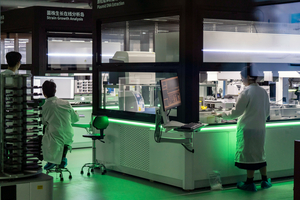
Facing China’s scale advantage, Korea pushes for looser listing rules, cash-based R&D credits, venture ecosystem overhaul In this file photo, researchers work in a lab at the Shenzhen Synthetic Biology Infrastructure facility in Shenzhen, China, on Nov. 26, 2025. (Bloomberg) China’s biopharmaceutical rise is no longer incremental — it is structural, accelerated and globally consequential.So formidable has China’s biotech sector become that the US National Security Commission on Emerging Biotechnology recently warned policymakers they have a three-year window to act decisively if the US hopes to retain global leadership.For South Korea, which has designated biotechnology as one of three “game changers” for scientific sovereignty, the message is sobering. The gap with China is no longer theoretical. It is wide — and widening.Experts say the question for Seoul is no longer how to match China’s scale, but how to build a defensible niche in a race increasingly defined by the pace of innovation, capital and regulatory agility.China’s scale — and speedThe numbers alone illustrate the imbalance.Korea’s drug industry logged $14.5 billion in out-licensing deals in 2025, a sharp rise from $5.5 billion the previous year, according to the Korea Pharmaceutical and Bio-Pharma Manufacturers Association. By contrast, China recorded $135.7 billion in out-licensing deals in 2025 after securing $51.9 billion in 2024, according to the Chinese National Medical Products Administration.But scale tells only part of the story. China’s competitive advantage increasingly lies in the speed at which it can innovate.Over the past decade, Beijing has overhauled its clinical trial regime. In 2018, it introduced a revised investigational new drug system that automatically allows trials to begin if regulators do not raise objections within a set review period. Since 2015, it has expanded investigator-initiated trials to generate early data and proof-of-concept results more quickly. China also joined the International Council for Harmonisation of Technical Requirements for Pharmaceuticals for Human Use in 2017, aligning its standards more closely with global norms.The result is a compressed development cycle.“China is cutting down the time it takes from early drug discovery to IND application by 50 to 70 percent,” said Oh Ki-hwan, head of the Bio-Economic Research Center at the Korea Biotechnology Industry Organization. “It can also gather large patient pools quickly for Phase I trials.”China has effectively created one of the world’s largest and fastest clinical trial platforms — a powerful draw for global pharmaceutical companies seeking rapid validation.“It’s difficult for Korea to compete directly,” Oh said. “China has clear advantages in new drug development capabilities and the pace of clinical progress.”Korea’s uneven landscapeAgainst that backdrop, Korea’s biotech ecosystem presents a mixed picture.The country’s top 20 pharmaceutical and biopharmaceutical companies posted record combined sales of roughly 25 trillion won ($17 billion) in 2025, up 15 percent year-on-year. Major firms including Samsung Biologics, Celltrion, GC Biopharma, Chong Kun Dang Pharmaceutical, Kwangdong Pharmaceutical and Daewoong Pharmaceutical reported solid earnings.Yet beneath those headline figures, smaller biotech ventures — the engine of pipeline diversification — are struggling.“Since the second half of 2022, rising interest rates have dampened investment in biotech ventures,” said Jon Sang-yong, a professor of biologics sciences at KAIST who has founded three startups.“Only a handful of companies received funding. Those already in clinical trials could not sustain studies due to lack of capital. Without milestones, it became even harder to attract investment. It’s a vicious cycle.”A survey by the Korea Biotechnology Industry Organization found that 7 out of 10 biotech firms reported serious financial difficulties as of May last year.Jon argues that incremental increases in government funding are insufficient. This year’s Korea Drug Development Fund budget rose 13.3 percent to 154.8 billion won, but he says much of that will support ongoing projects rather than new ones.“Biotech startups require far more capital than IT startups,” he said. “If both receive 500 million won in support, the impact is completely different.”He called for a bio-specific version of the Tech Incubator Program for Startup, or TIPS — Korea’s public-private funding model — tailored to the capital intensity and longer timelines of drug development.Rethinking strategy: from scale to structureExperts broadly agree that Korea cannot outspend or outscale China in biotechnology. Instead, they argue for a structural response built on regulatory reform, capital continuity and global integration.Ahn Joon-mo, professor of public administration at Korea University and president of the Korean Society for Innovation Management and Economics, said regulatory reform is urgent.“Korea’s bio regulations are among the strictest in the world,” he said. “Talented researchers are going abroad because the startup environment here is not competitive.”Ahn pointed to restrictions on data sharing in hospitals and slow approval processes as bottlenecks. He called for bolder deregulation, expanded fast-track pathways for innovative drugs and more flexible use of medical data.The National Academy of Engineering of Korea has also urged changes to Kosdaq listing rules. Under current regulations, companies risk delisting if losses from continuing operations exceed 50 percent of equity and 1 billion won for more than two of the past three years.“For biopharmaceutical firms that require long-term R&D investment, it is difficult to meet general profitability requirements shortly after listing,” the academy said in a January letter.By contrast, the US Nasdaq does not impose ongoing profitability requirements, allowing innovative firms to prioritize R&D over near-term earnings.The academy also criticized Korea’s R&D tax credit system, noting that many biotech startups — often loss-making — cannot benefit because they have little corporate tax liability to offset.It recommended introducing a cash refund mechanism for unused credits to strengthen liquidity and sustain R&D spending.Working with — not against — ChinaSome experts argue that Korea’s strategy should incorporate China’s strengths rather than attempt to sidestep them.Oh of the KBIO suggested a “parallel clinical trial” approach: leveraging China’s scale and speed to generate early data while simultaneously conducting trials in the United States or European Union to meet US Food and Drug Administration standards.This dual-track model could accelerate development while preserving access to global markets.Another pathway gaining attention is the “NewCo” model, widely adopted by Chinese biotech firms. In this structure, companies spin off promising pipelines into new entities established in more investor-friendly jurisdictions to attract global capital.“Unlike the traditional method of starting a venture, this approach secures funding and management resources from the early stages,” said Yoon Hee-jung of the Korea Institute of Science and Technology Evaluation and Planning.Yoon pointed out that Korea has various cases of major drug-makers working with academics but lacks an ecosystem that can adopt the NewCo model with a weak presence of venture capitals and accelerators in the biotechnology sector.“Considering Korea’s high-quality pipelines and data from clinical trials, as well as fast research and production capabilities, (the NewCo model) can be an effective approach to speed up R&D efforts and increase chances of success," she said.With China accelerating on scale, capital and regulatory speed, Korea’s challenge is less about closing the quantitative gap and more about defining a sustainable position.That could mean specializing in certain therapeutic areas, strengthening manufacturing-led partnerships, refining regulatory frameworks to retain talent and ensuring capital continuity through the clinical “death valley” that threatens so many startups. hwkan@heraldcorp.com
Share this story