timesca.com
Central Asia and Azerbaijan on Board as the Gaza Peace Effort Gets Underway
timesca.com · Feb 16, 2026 · Collected from GDELT
Summary
Published: 20260216T124500Z
Full Article
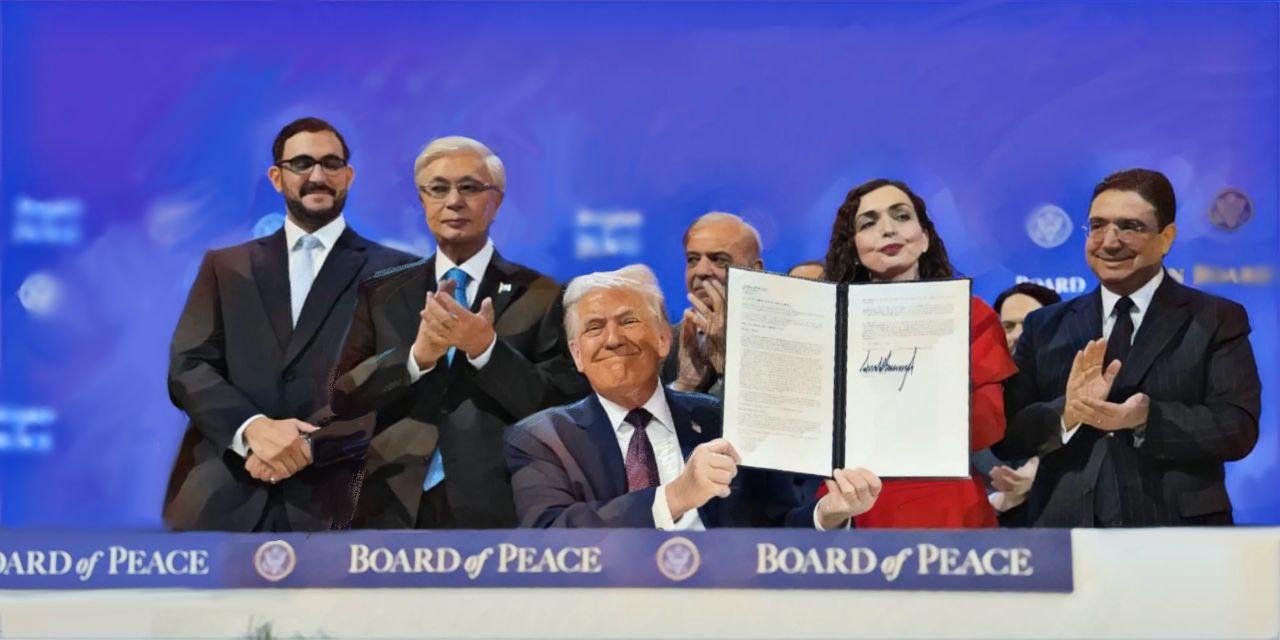
As the Trump Administration is trying to drag the world toward the reconstruction of Gaza, an undertaking fraught with security, political, and economic challenges, a gap is emerging between the “old” Europe, skeptical of Trump, and nation-states seeking to expand cooperation with Washington. Central Asian and Caucasian “middle powers” are among the emerging allies in the Trump Administration’s latest diplomatic gambit for peace. Kazakhstan took a leadership position as the first Muslim-majority state outside the Middle East to join the Abraham Accords in November 2025. President Kassym-Jomart Tokayev, an experienced diplomat, former Foreign Minister, and high-level U.N. official, represented his country at the Board of Peace inauguration during the January 2026 session of the World Economic Forum in Davos, Switzerland. So did Ilham Aliev, President of Azerbaijan, and his First Lady and First Vice President, Mehriban, both of whom met with Trump in Davos. The attendance and participation of leaders of other majority-Muslim states outside the Middle East are also noteworthy. President Shavkat Mirziyoyev of Uzbekistan, Prabowo Subianto of Indonesia, Vjosa Osmani-Sadriu of Kosovo, and Prime Minister Mian Muhammad Shehbaz Sharif of Pakistan signed the Charter on behalf of their respective nations. Those who chose not to participate are equally noteworthy. France, the United Kingdom, Belgium, Portugal, Canada, and Australia, which publicly announced or reaffirmed recognition of a State of Palestine around the U.N. General Assembly in September 2025, each determined not to attend the signing ceremony at Davos, despite the fact that the establishment of the Board was officially welcomed by the UN Security Council in November 2025. This underscores the challenges that will arise as Trump’s Comprehensive Plan to End the Gaza Conflict enters its second phase, which foresees Hamas’ disarmament. Similarly, differences in policy toward Israel among the Muslim-majority countries that signed the Charter speak to the complexity of the Board’s task. Kazakhstan, Uzbekistan, and Azerbaijan have longstanding diplomatic and trade relations with Israel. This contrasts with the complex and often hostile stances of Qatar, long ruled by the Al Thani family, and Turkey under Recep Tayyip Erdoğan, both of which support the Muslim Brotherhood and shelter Hamas terrorists. Then there are countries like Indonesia and Pakistan, which have never had diplomatic relations with Israel. Indonesia, under Subianto, continues to condition recognition of Israel on the creation of a Palestinian state. Pakistan has been officially hostile since its founding, and is particularly fearful of Jerusalem’s increasingly close relations with India, though it does have a history of covert information sharing and unofficial cooperation. Once again, navigating the political agendas and moving the reconstruction project forward will require a multi-dimensional chess game. Nevertheless, the Trump White House is working on the Board of Peace’s first meeting, set for February 19th. Currently, there is no official word about whether the leaders of Kazakhstan and Uzbekistan will attend, while other leaders plan to, such as President Aliyev, who just signed a Strategic Partnership Charter during a visit by U.S. Vice President J.D. Vance to Azerbaijan, and PM Nikol Pashinyan of Armenia, who also signed a $9 billion nuclear cooperation agreement with the U.S. during Vance’s visit. Attendees will also include President Javier Milei of Argentina, PM Viktor Orban of Hungary, and President Subianto, whose country is reported to be readying 8,000 troops to deploy to Gaza to focus on medical and engineering roles. These troops are the first to be committed to the International Stabilization Force (ISF), led by Major General Jasper Jeffers, envisioned under the 20-point Comprehensive Plan to End the Gaza Conflict. Astana, Tashkent, and Baku are viewed as potential candidates to provide personnel for the ISF, although Azerbaijan earlier stated it would not do so. What Happens in the Middle East Doesn’t Stay in the Middle East The inclusion of Kazakhstan and Uzbekistan in the Board of Peace marks a significant shift in the diplomatic landscape of Central Asia. With the future of the Iranian regime and the consequences of Russia’s war in Ukraine still unpredictable, one thing is clear. The world is in the throes of a systemic, prolonged, and fundamental geo-strategic change. Central Asia will be affected and is also seeking the ability to influence its pace and direction. While Russia and China remain powerful, nuclear-armed neighbors and business partners, this global transformation requires a good working relationship with the U.S. Although the White House has made it clear that “boots on the ground” are out of the question in Iran for now, it has taken an assertive approach to developments in the Middle East and is increasingly involved in Central Asia and the South Caucasus after a lengthy period of low-profile, rather selective engagements, often dictated by external events, such as the war in Afghanistan. Azerbaijan and Turkmenistan, bordering troubled Iran, have a direct interest in deepening their ties with the U.S. to bolster their security, as evidenced by the recent visit to the “permanently neutral” country of Turkmenistan by U.S. Central Asia Special Envoy Sergio Gor and Secretary of the Army Daniel Driscoll. Costs, Dangers, and Opportunities While there is no cost to join the Board of Peace, countries that choose to become permanent members will reportedly pay $1 billion during the first year post the Charter. However, that pales in comparison with the estimated $70 billion needed to reconstitute Gaza, including the indispensable reconstruction of Gaza’s infrastructure, as discussed earlier. Then there is the thorny question of what to do about Hamas, which is tightening its grip on the territory in Gaza it has left, while its leaders loudly proclaim that they refuse to leave or disarm. As the February 19th meeting approaches, the world will be watching to see if the “high-wire act” held together by American willpower can compel the confidence, resources, and determination to bring a new dawn to Gaza and, through it, increased opportunities for those who came to the effort early, including in Central Asia and the South Caucasus.
Share this story