irishtimes.com
Beyond the medical : good doctors must use the head , hands and heart
irishtimes.com · Feb 17, 2026 · Collected from GDELT
Summary
Published: 20260217T080000Z
Full Article
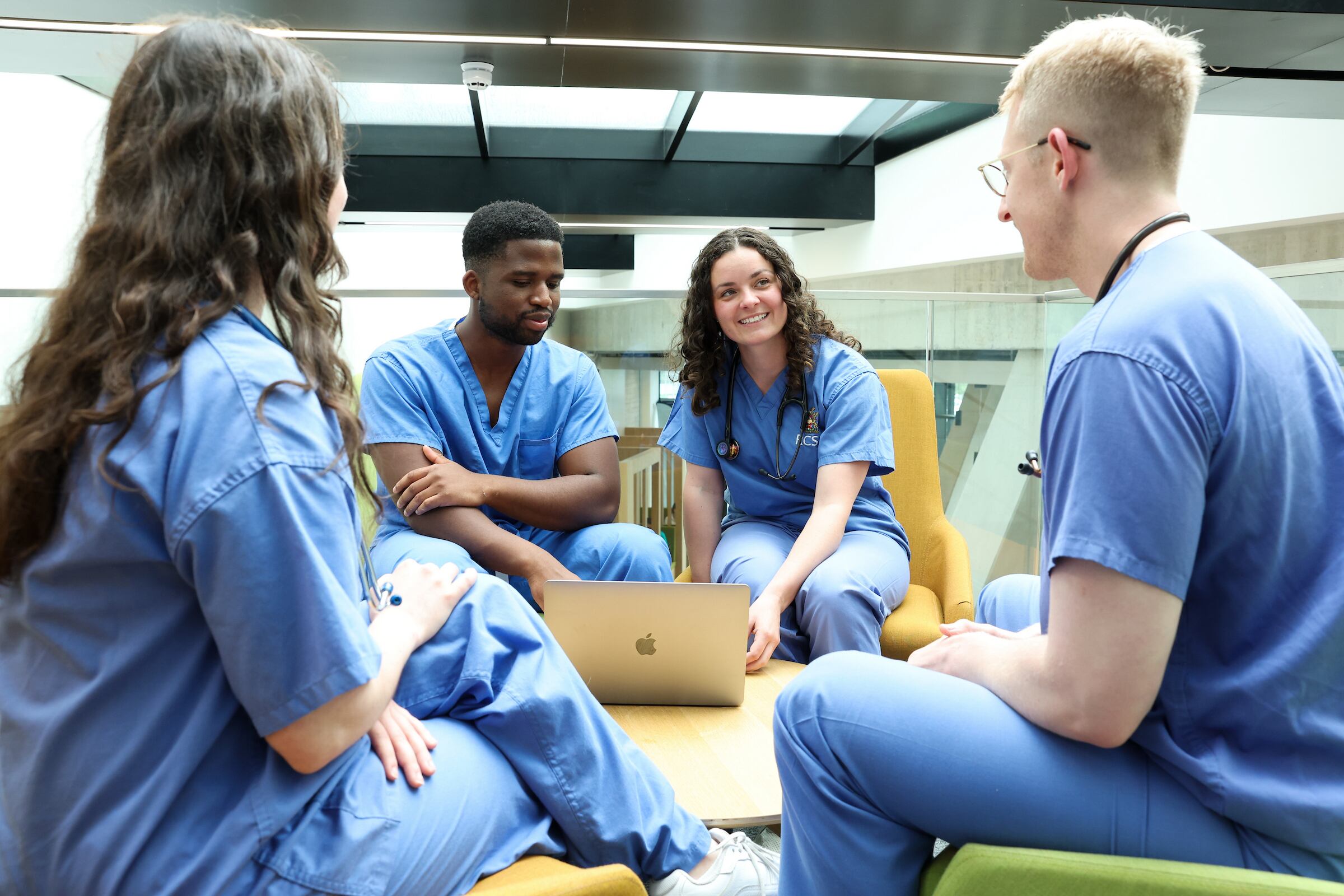
How can you respectfully communicate to a patient that you’re currently with someone else and it may take half an hour before you can get to them?Medical students at RCSI’s Education and Research Centre, Connolly Hospital, Dublin. Photograph: Maxwells Prof Anne HickeyTue Feb 17 2026 - 05:31 • 4 MIN READMedical education is changing. In the past we’ve focused on teaching anatomy, physiology and clinical skills, with less attention to what are often referred to as “soft skills”: resilience under pressure, knowing when to lead and when to collaborate, and the two-sided coin of empathy and self-awareness.But along with the transfer of knowledge, today’s educators understand the importance of developing well-rounded graduates who can connect with their patients.Lifestyle medicine, which focuses on preventing and treating illness through evidence-based approaches to physical activity, nutrition and other aspects, has also become more significant for doctor and patient health. The goal is to ensure that medical professionals are not only taught to treat illness, but also how to promote health – both for patients and for themselves.At my university, the three key pillars of our medical education are head (knowledge), hands (skills) and heart (personal and professional identity).Personal and professional identity comprises three strands: professionalism, leadership and resilience. These are sewn into the fabric of the curriculum, placing them at an equal level to other skills developed during a student’s training. [ State is now ‘highly dependent’ on doctors trained abroadOpens in new window ]We can both develop and assess these skills through case-based learning in small class settings, ideally with groups of no more than 12. In addition, these activities promote self-awareness and emotional intelligence. We’ve also found programmatic assessment, with regular, ongoing testing and feedback throughout the year, can help students to develop a growth mindset and learn from their mistakes. This way, one bad day doesn’t hugely impact a student’s grade. Here’s how it can work.Focus on professionalismWhether someone is training to be a doctor, physiotherapist or another type of health professional, they come to university with a past. Students come from different backgrounds or parts of the world, all with different cultural and life experiences. Exploring professionalism means providing opportunities within the curriculum for students to consider their own approach to their career and what they value, both for themselves and for their patients. Here, we provide them with teaching and a forum in which to develop their values, behaviours, attitudes and approaches to professional relationships and patient safety. An example of a scenario: you notice that a senior surgical trainee habitually criticises theatre nurses in front of other team members when they ask for advice or request details for patients. Her responses are rude, dismissive, critical and sound arrogant and superior to others, and clearly make the rest of the team feel uncomfortable.Working with their peers, students can discuss what they would do in such a situation. How do you communicate and support your colleagues? And how can you do this empathically and professionally?Focus on leadershipTraditionally, medical curriculums have not focused on leadership. This is despite the fact that medical schools have no shortage of effective leaders, providing plenty of opportunities to integrate this value into the teaching process. Being a good leader isn’t always about taking charge. It’s also about knowing how to collaborate and embrace other people’s ideas, and recognising when it’s time for you to pull back and let someone else take the reins.Leadership means considering different communication styles and approaches to conflict resolution and decision-making. Students learn these skills through workshops focused on teamwork and constructive conflict resolution – skills that are essential in fast-paced clinical settings such as the emergency department. The emphasis is on understanding your own strengths and weaknesses as a way to develop self-awareness and empathy, making you a better doctor as well as a better colleague.[ Doctor burnout: New support for exhausted medicsOpens in new window ]Focus on resilienceFrom the outset, students need to understand that they will have difficult times during their studies and in their career. Senior and junior doctors face challenges in their professional lives, particularly in busy clinical settings. Supporting patients who are unwell and their families can be emotionally draining. Demands and expectations can pile up. A doctor’s resilience can be pushed to the limits in a healthcare system that can make impossible demands, causing burnout. This is why it’s so important to develop skills of resilience and a growth mindset, and to equip our students with strong coping and reflective skills. Developing skills of resilience supports them to see problems and mistakes with perspective and as opportunities for growth. This is achieved through case-based learning and small group workshops, where students explore scenarios with a focus on difficult times they may face in their career. These scenarios are based on real-life clinical examples presented by senior clinicians, with the aim of examining common pitfalls and how to avoid them. An example of a scenario in this context focuses on a junior hospital doctor dealing with a very sick patient, while being bleeped continuously by five or six people at the same time. The junior doctor feels stressed and overwhelmed. How do they prioritise? In small groups, students discuss how you can respectfully communicate that you’re currently with someone else, and that it may take half an hour before you can get to them. And how can you best do this skilfully and professionally without damaging collegial relationships?For medical educators the benefits of this approach are clear: Students are engaging with a holistic curriculum that focuses on the acquisition of knowledge and the development of clinical skills in tandem with forming their personal and professional identity.Graduates will enter the workforce not only with clinical competence, but also with the resilience, professional self-awareness and leadership required to sustain themselves in demanding roles while delivering compassionate, patient-centred care. Prof Anne Hickey. Photograph: Patrick Bolger Prof Anne Hickey is a health psychologist and emeritus professor at the Department of Health Psychology and outgoing deputy dean for positive education at RCSI University of Medicine and Health Sciences. This article was originally published in Campus by Times Higher EducationIN THIS SECTION
Share this story