pressenza.com
Clustered Story
Bangladesh Post - Election Reckoning : A Landslide Victory , Wary Neighbours and the Legacy of July
pressenza.com · Feb 15, 2026 · Collected from GDELT
Summary
Published: 20260215T123000Z
Full Article
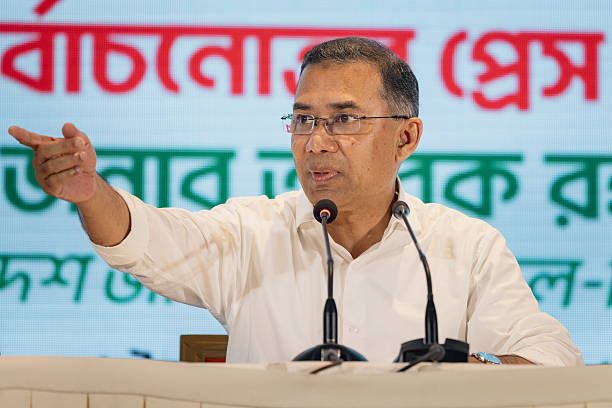
by Asif Showkat Kallol (Dhaka Bureau) Bangladesh has entered a decisive new phase following the 12 February 2026 general election, which delivered an overwhelming parliamentary majority to the Bangladesh Nationalist Party (BNP), ending over a decade and a half of authoritarian rule and closing a turbulent chapter in the nation’s political history. The vote, held despite months of scepticism that an election would take place at all, followed the July 2024 mass uprising that toppled Sheikh Hasina’s government. With the Awami League politically dismantled, the BNP emerged as the dominant force, converting years of repression, enforced disappearances, and marginalisation into a decisive mandate. For BNP chair Tarique Rahman, returning from long exile to lead his party to victory, the result represents both vindication and a test. His oft-repeated pledge- ‘I have a plan’- now faces scrutiny, with observers noting that the government’s first 100 days may define whether the promise signals genuine reform or rhetorical ambition. Delhi Watches Closely Nowhere is the outcome being analysed more closely than in New Delhi. India moved quickly to acknowledge the result, with Prime Minister Narendra Modi among the first to congratulate Bangladesh’s new leadership, ahead of China and Pakistan. Analysts suggest the move is strategic, aimed at stabilising relations after 18 months of uncertainty and countering fears of a potential China-Pakistan-Bangladesh alignment. Indian concerns extend beyond geopolitics. Border security, irregular migration, and lingering public resentment over perceived Indian support for Hasina remain sensitive issues. Yet there is reassurance for New Delhi: Jamaat-e-Islami did not emerge as a governing force, easing concerns of a hardline Islamist turn. The BNP plans to formally invite Modi to attend Tarique Rahman’s oath-taking ceremony. Former Prime Minister Sheikh Hasina and many Awami League leaders remain in India. Legal proceedings have been initiated against those who fled the country following the 2024 uprising, and Hasina has been sentenced to death on murder charges. Party sources indicate that, if it assumes power, the BNP will pursue diplomatic and legal measures to repatriate her. During the BNP’s previous term, Taiwan opened an office in Bangladesh despite objections from China, creating tension in Dhaka–Beijing relations. Meanwhile, uncertainty persists over how to repatriate more than 1.3 million Rohingya refugees from Myanmar. At a post-election press conference, Tarique Rahman said the party would prioritise regional cooperation and work to reactivate SAARC through dialogue with friendly states. Rahman has also committed publicly to respecting India’s interests while reviving the BNP’s ‘Bangladesh First’ doctrine, signalling that cooperation will continue but framed in more sovereignty-conscious terms. For India, the relationship has become a careful waiting game, shaped by pragmatic choices in Dhaka rather than ideological alignment. A Fragmented Opposition and the Legacy of July Domestically, the election has reshaped Bangladesh’s political landscape. With the Awami League weakened, Jamaat has assumed the role of principal opposition, while the youth-led National Citizen Party (NCP), born out of the July uprising, secured parliamentary representation, becoming a third political force in a system historically dominated by two parties. Left-wing parties fared poorly at the ballot box, a result some analysts attribute to lingering public fear shaped by years of authoritarian ‘elimination politics.’ Their online celebrations of the BNP victory drew criticism from rivals, who argued that such behaviour echoes past cycles of division rather than renewal. Reform Expectations and Early Risks The BNP inherits a state widely regarded as institutionally weakened and economically strained after years of unchecked corruption and politicisation. A recent referendum endorsing state reform has raised public expectations that structural change- from governance and accountability to welfare and social democracy- will extend beyond rhetoric. But risks are immediate. Allegations of corruption and extortion involving party activists remain a persistent concern, and critics warn that repeating the excesses of past governments could quickly erode public goodwill. Supporters who mobilized under extreme repression- described as the BNP’s ‘Kajolrekhas’ in political folklore- fear being sidelined by opportunists seeking proximity to power. The Yunus Interlude and the Youth Factor Many credit the interim administration, led by Nobel laureate Muhammad Yunus, his advisory council, the army, and the civil administration, with restoring the democratic process and steering the country toward elections despite intense hostility from multiple quarters. The July uprising itself remains a potent symbol. Its leaders and supporters, spanning Gen Z and Gen Alpha, have carried their demands from the streets into parliament and digital spaces, reshaping political discourse. Analysts suggest that the BNP’s long-term success will hinge less on appeasing traditional elites and more on engaging this younger generation, whose priorities centre on inclusion, justice, and accountable governance. A Mandate with Limits The BNP’s landslide ends a long political tragedy for the party but also narrows the margin for error. As one observer noted, simply doing ‘everything the Awami League did not do’ could be sufficient to establish a baseline of good governance- provided discipline and restraint prevail. Bangladesh’s electorate has delivered a clear verdict: power is no longer an end in itself but a responsibility. Whether the BNP can translate its historic majority into durable reform, regional balance, and democratic renewal will determine whether February 2026 represents a genuine turning point or merely another chapter in the country’s turbulent political story. —————————————————————————————————————————————————- The Author: Asif Showkat Kallol: Germany-based online outlet, Head of News, The Mirror Asian & Contributor, Pressenza- Dhaka Bureau.
Share this story