dailytrust.com
Clustered Story
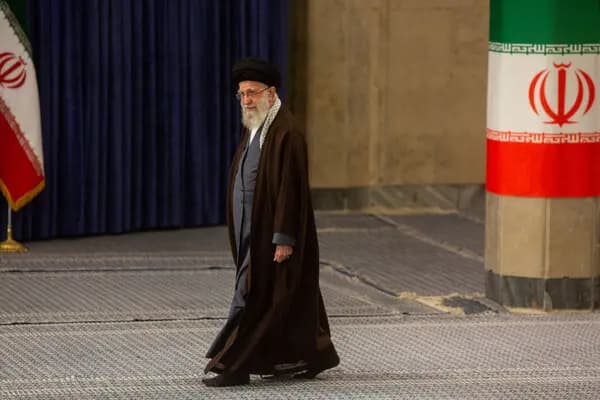
Ayatollah Ali Khamenei : The Leader Who Shaped Iran Defiance
dailytrust.com · Mar 1, 2026 · Collected from GDELT
Summary
Published: 20260301T134500Z
Full Article
Iran’s supreme leader, Ayatollah Ali Khamenei, has been killed in an attack by Israel and the United States. He was 86.Iranian state media confirmed the death in the early hours on Sunday after US President Donald Trump said that Khamenei had been killed in a joint US-Israeli air strike that hit his compound on Saturday. “It is announced to the Iranian people that His Eminence Grand Ayatollah Imam Sayyid Ali Khamenei, Leader of the Islamic Revolution, was martyred in the joint attack launched by America and the Zionist regime on the morning of Saturday, February 28,” Iran’s semi-official Tasnim News Agency reported. Iranian state media said that Khamenei’s daughter, son-in-law, and grandson were also killed.SPONSOR AD Trump said earlier that Khamenei and other Iranian officials ”couldn’t escape US intelligence and the advanced tracking systems”. ‘Lucky soul who died in Jihad’, Gumi hails Supreme Leader of Iran Adebayo: Tinubu’s Emergence Painful Lesson To NigeriansKhamenei took the helm in Iran in 1989, following the death of Ayatollah Ruhollah Khomeini, the charismatic leader who had spearheaded the Islamic revolution a decade earlier.While Khomeini was the ideological force behind the revolution that ended the rule of the Pahlavi monarchy, it was Khamenei who shaped the military and paramilitary apparatus that forms both Iran’s defence against its enemies and provides it with influence well beyond its borders.Before becoming the supreme leader, he had led Iran as president through a bloody war with Iraq in the 1980s. The grinding conflict, coupled with a sense of isolation among many Iranians as Western countries backed Iraqi leader Saddam Hussein, deepened Khamenei’s distrust of the West, generally, and the US, in particular, analysts say.That sentiment would underpin his decades-long rule and cement the idea that Iran must remain in a constant state of defence against external and internal threats.“People think [of Iran] as a theocracy, because he [Khamenei] wears the turban and the language of the state is the language of religion, but in reality, he was a wartime president that came out of war with the assumption that Iran is vulnerable and in need of security,” said Vali Nasr, Iranian affairs expert and author of Iran’s Grand Strategy: A Political History. “That the US is hostile to Iran; and that the revolution, the Islamic republic and nationalism, are not separated” and that so, they need to be protected.Under this vision, the Islamic Revolutionary Guard Corps (IRGC) evolved from a paramilitary force into a powerful security, political and economic institution that became central to broader Iran’s influence across the region. Khamenei also promoted a “resistance economy” to foster self-reliance in the face of punishing Western sanctions, maintained a strong scepticism of engagement with the West, and responded forcefully to critics who argued his focus on defence was blocking much-needed reforms.Get instant alerts and updates based on your interests. Be the first to know when big stories happen. Yes, keep me updated But his rule was seriously tested over the years, including in 2009, when protesters who took to the streets over what they claimed was a rigged presidential election were met with a brutal crackdown, and in 2022 over women’s rights.Possibly the biggest challenge to his rule came in January when protests triggered by economic hardship morphed into nationwide upheaval, with many protesters directly calling for the overthrow of the Islamic republic. The authorities’ response led to one of the most violent confrontations since the country’s 1979 revolution.Critics saw him as being too out-of-touch with a young population seeking reforms and economic improvement over isolationism and forever shadow wars with the US and Israel.“Iranians paid too high a cost for this degree of insistence on national independence – in the process, he lost the Iranian population because they no longer believed in the wisdom of this independence,” Nasr said. The early years Born in 1939 in the holy Shia city of Mashhad in northeast Iran, Khamenei was the son of a renowned Muslim leader and ethnic Azerbaijani from neighbouring Iraq. The family first settled in Tabriz in northwestern Iran before moving to Mashhad, a place favoured by religious pilgrims, where Khamenei’s father led an Azerbaijani mosque.Khamenei described his mother, Khadijeh Mirdamadi, as an avid Quran and book reader who instilled in her son a love of literature and poetry, and later supported her son as he joined the movement against the Pahlavi dynasty’s rule.Khamenei started his studies at age four, learning the Quran, and completed his primary education at the first Islamic school in Mashhad. He did not finish high school, instead attending theology schools and learning from renowned Islamic scholars of the time, like his father, and Sheikh Hashem Ghazvini. In the following years, he continued his studies at more prestigious Shia centres for higher education in Najaf and Qom.In Qom, he learned from and became close to a number of other famous Muslim scholars, including Ayatollah Khomeini, who was popular among young seminarians for his defiance of the shah.Khamenei taught jurisprudence courses and public theology interpretation classes, which also allowed him to gain access to a growing audience, especially young students who were beginning to become disillusioned with the monarchy.The monarchy at the time had been reinstated to absolute power following an MI6 and CIA-orchestrated coup in 1953, which ousted democratically elected Prime Minister Mohammad Mosaddegh after he attempted to nationalise the Iranian oil industry.As a political activist, Khamenei was repeatedly arrested by the shah’s secret police (SAVAK) and sentenced to exile in the remote city of Iranshahr in southeastern Iran, but returned to take part in the 1978 protests that led to the end of the Pahlavi rule. The supreme leader Once the monarchy had been deposed, Khamenei became a key figure in establishing the new Iran. He served briefly as minister of defence in 1980 and later as the supervisor of the Islamic Revolutionary Guard Corps (IRGC) after the outbreak of the Iran-Iraq war. A fiery orator, he also secured the influential post of Tehran’s Friday prayer leader.1981 proved a momentous year for Khamenei. He lost the use of his right arm after narrowly escaping an assassination attempt by the Mojahedin-e Khalq (MEK), an opposition group that had started an armed uprising against the newly established Iranian theocracy after falling out with Khomeini. In the same year, Khamenei won the presidency, becoming Iran’s first clerical president.In 1989, the death of Khomeini was a turning point for the Islamic republic. Before his death, Khomeini had sidelined his long-time designated heir, Ayatollah Hossein Ali Montazeri, due to the latter’s criticism of the mass execution of prisoners in 1988.A council that had been set up to revise the constitution appointed Khamenei instead. To make that happen, the council had to loosen the qualifications required to hold the country’s top job. Khamenei did not have the title of the hojatoleslam – a high-ranking Shia clerical title.“I believe I do not deserve this position; perhaps you and I know this. This would be symbolic leadership, not real leadership,” Khamenei said at the time.But his leadership has been anything but symbolic.Khamenei’s early tenure as ayatollah was defined by efforts to rebuild a country shattered by eight years of war with Iraq. More than a million people were killed in the conflict, and the economy was left in ruins. The conflict had also fostered resentment towards the international community over its perceived inaction following Iraq’s use of chemical weapons against Iranian forces and civilians. While still president, Khamenei would frequently visit the front lines, earning the loyalty of the IRGC and gaining a firsthand understanding of the realities of war.“He is the leader whose formation was in the war with Iraq – that framed his outlook on domestic and foreign politics. Once he became the supreme leader, he focused on building the military and paramilitary apparatus for a siege, for constant resistance,” said Narges Bajoghli, an associate professor of anthropology and Middle East studies at John Hopkins University.But the mood began to change in the 1990s. The country was in desperate need of investment, while the revolutionary fervour had begun to cool somewhat. Some, exhausted by the war, were eager to see Iran return to the international fold.That sentiment translated into a landslide election victory for reformist Mohammad Khatami in 1997, an advocate for rapprochement with the West and promoter of a “dialogue among civilisations”.“Khamanei never had a natural base for himself compared to Khomeini,” said Bajoghli, also the author of Iran Framed. “So he put a lot of funding in redoing the education and training for the young generations [within the paramilitary system] that would then find their way up.”That meant giving the IRGC a free hand to build a network of businesses that would allow them to dominate Iran’s economy while also intensifying training programmes, especially for younger members of its paramilitary volunteer force, the Basij. While it was a limited section of society, it was one that would grow in line with Khamenei’s posture of perpetual resistance against the West and one that was given great resources. More importantly, Bajoghli said, they were willing to fight and die.These new ranks within the paramilitary force were the ones called upon to suppress the nationwide protests that erupted after the disputed presidential election victory of Mahmoud Ahmadinejad, a staunch opponent of the West, in 2009. By then, a new generation of Iranians – born after 1979 – were less attuned to the anti-imperialist, anti-colonial narrative that had inspired their parents’ revolution.I
Share this story