maltatoday.com.mt
Alex Borg lambasts prime minister for rushing anti - deadlock mechanism without consulting Opposition
maltatoday.com.mt · Mar 1, 2026 · Collected from GDELT
Summary
Published: 20260301T130000Z
Full Article
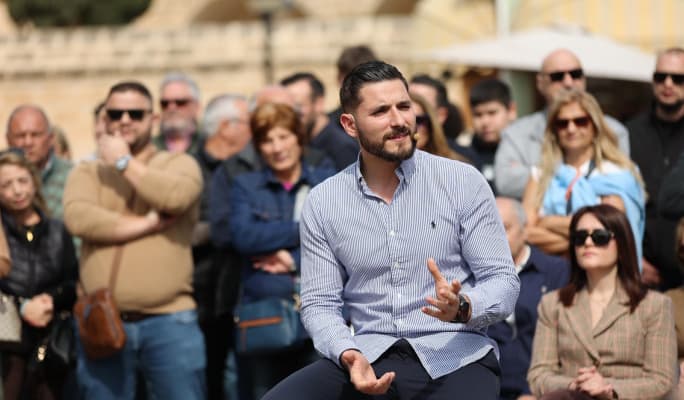
Nationalist Party leader Alex Borg has warned Prime Minister Robert Abela that he cannot push through anti-deadlock legislation on his own terms, saying that even such a mechanism requires a two-thirds majority and must first be discussed with the opposition. Borg proposed the anti-deadlock mechanism to elevate the Chief Justice appointment and safeguard judicial independence, but Abela quickly announced he would introduce his own amendment in parliament. Borg said Abela had once again attempted to impose his own agenda without prior discussion. He also pointed out the controversy surrounding the appointment of the Chief Justice, following a sworn statement by sitting Judge Lawrence Mintoff last week, which made serious accusations against Prime Minister Robert Abela. Borg said that allegations of this nature against a prime minister further erode public trust in politics. Borg stated Abela intended to politicise the appointment, first by delaying the consultation and then by proposing a name he knew wouldn't secure a two-thirds majority. Abela also ignored four alternative names, dismissing them without valid reasons. "The Prime Minister chose to be stubborn in this discussion. He chose to make this appointment a political football," Borg said. "He chose to act not in the national interest but only to please his most fervent Labour supporters." In response, Borg said he had proposed an anti-deadlock mechanism that would lift the decision above the political level, in the interest of protecting the independence of the judiciary. He criticised Abela for then rushing to table an amendment in parliament without prior discussion with the opposition, warning that even an anti-deadlock mechanism requires a two-thirds majority and that Abela could not simply push it through on his own terms. This came during a party activity in Mellieħa, where Borg also pledged to begin work on a national mass transport system within the first 100 days of a PN government, affirming the project would be completed within five years. "In the first 100 days as Prime Minister of our country, we will begin the work of mass transportation, that is how determined we are, that is how prepared we are," Borg said. "In five years, we will complete the biggest mass transport line in our country so that the Maltese and Gozitan people can benefit from it." At the previous week's National Convention, Borg emphasised it was a foundation for ongoing growth, not a start or end. He highlighted that the convention genuinely represented the people's voice and influenced future policies. Borg stressed real politics involve daily contact with young people, families, workers, businesses, and seniors, not just pre-election appearances. George Vital Zammit, who drafted the PN's electoral programme, said he was given full freedom to act in the country's best interests. He highlighted the convention allowed open discussion on issues like education, community, and economy. Vital Zammit stressed that PN must be clear with people, even on tough topics, and have the courage to face challenges instead of making excuses. PN Opposition Whip Robert Cutajar announced he won't contest the next election. Having served as Mellieħa Mayor and sat in parliament under three PN leaders, he said the decision was tough, but he would honour his word. He plans to work until the election and contribute to the campaign, satisfied that Mellieħa, Naxxar, and St Paul's Bay now have Nationalist mayors. Borg concluded by calling on the public to join the PN on what he described as the next step forward for Malta and Gozo, promising that if elected prime minister, he would remain close to the people and continue listening to their concerns.
Share this story