aninews.in
Clustered Story
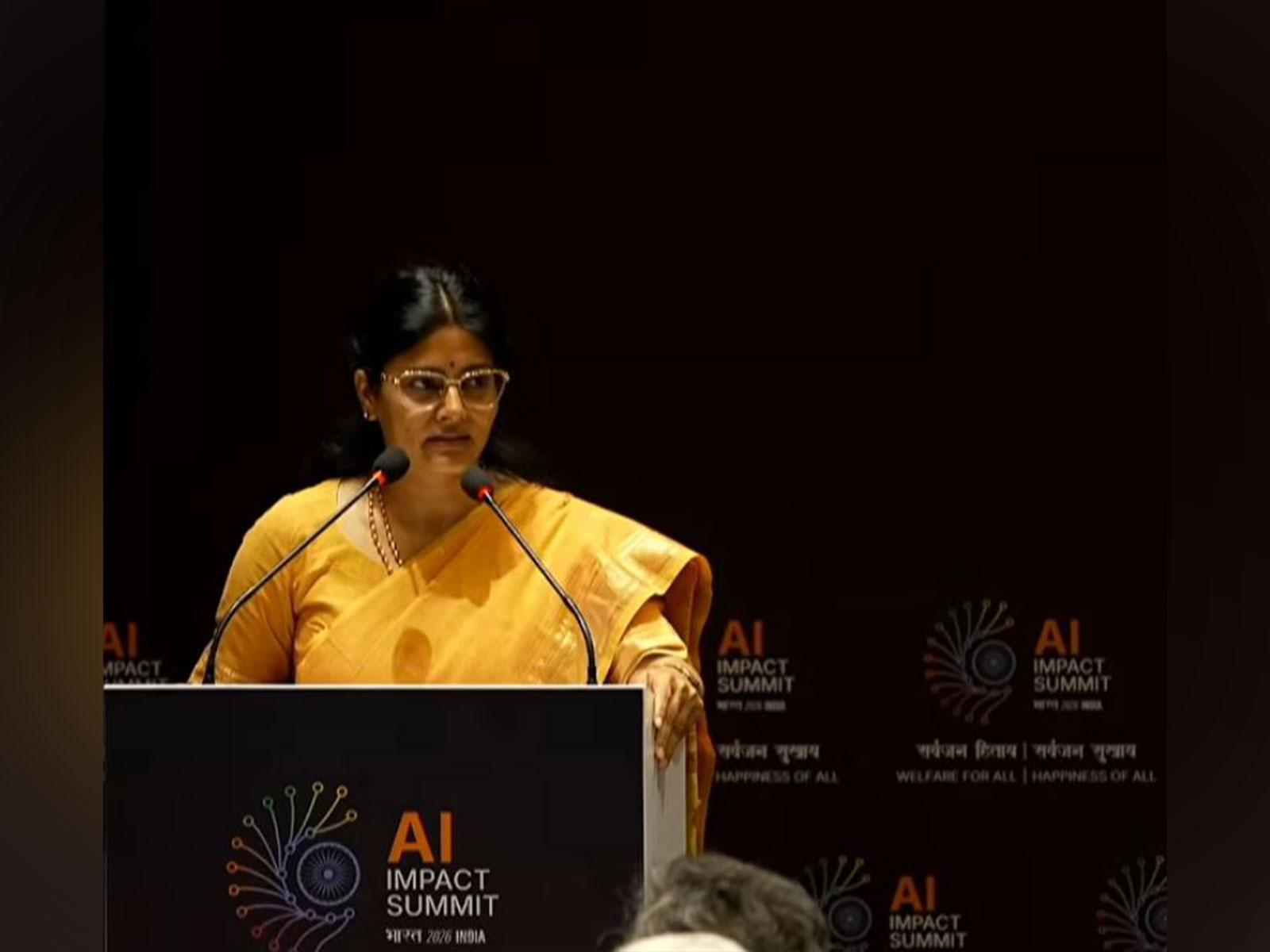
AI can address health inequities , but cannot replace human touch : Union MoS Health Anupriya Patel
aninews.in · Feb 17, 2026 · Collected from GDELT
Summary
Published: 20260217T064500Z
Full Article
Updated: Feb 17, 2026 11:06 IST New Delhi [India], February 17 (ANI): Union Minister of State for Health and Family Welfare Anupriya Patel highlighted the transformative role of artificial intelligence (AI) in healthcare on Tuesday. Speaking at the AI Impact Summit in the national capital, Patel asserted that India's governance model positions AI as an enabler and force multiplier, bringing the country closer to the goals of inclusivity and health equity."The real measure of the power of AI lies in the extent to which it is able to touch, it is able to address the health inequities. That's the governance model we follow, in which AI becomes an enabler and a force multiplier, and it is able to take us closer to the goals of inclusivity and health equities," Anupriya Patel said.She noted that India faces unique challenges due to its vast and diverse population, the rural-urban divide, and the dual burden of communicable and non-communicable diseases. Patel emphasised that technology is being strategically integrated into the national healthcare framework to address these challenges, generating real-time alerts for disease outbreaks and strengthening disease surveillance nationwide."India has unique challenges: our vast and diverse population, rural and urban divide, and also the dual burden of non-communicable as well as communicable diseases. So, when we look at these unique challenges, it becomes extremely important that we make use of technology, and we have had a comprehensive technological integration in our national healthcare framework, which we don't see as only adoption of technology, but a strategic response to the unique challenges that we have used," said Anupriya Patel.Under the One Health Mission, she highlighted the launch of an AI tool by the Indian Council of Medical Research that analyses genomes and predicts zoonotic outbreaks before transmission from animals to humans. She also cited the adoption of AI-supported handheld X-rays in tuberculosis screening programs as an example of AI augmenting healthcare efforts."This helps us to generate real-time data alerts for the disease outbreaks, and showcases the strength of AI, the power of AI in augmenting our efforts towards disease control and enhances our surveillance capacity in India. We also have one health mission. Now, under this mission, the Indian Council of Medical Research has also launched an AI tool which surveys the genomes and predicts the zoonotic outbreaks before the transmission actually takes place from the animals to the humans. And I heard one of our expert panelists talk about the use of the adoption of AI-supported handheld X-rays in our TB screening program," said Anupriya Patel. While acknowledging AI's potential, Patel stressed the importance of the human touch in medicine, noting that only a clinician can communicate with a patient and provide the compassion and empathy they need."When a treatment proceeds, healthcare thrives not just on algorithms. Healthcare thrives on human touch, on empathy, on compassion, on communication between a clinician and a patient. And this human touch can never be provided by AI. It is only a clinician, it is only a doctor who can communicate with this patient and provide that compassion and empathy that is needed by a patient," she said. Patel urged medical professionals to focus on AI literacy and noted that the National Board of Examinations in Medical Sciences has launched an online training program on AI in healthcare for doctors across India."So, what the doctors need to worry about today is AI literacy. I urge all the members of the medical fraternity who are present here today to spread this message that AI cannot compete with clinicians. It can only compensate for their absence, and our doctors and our clinicians need to be AI literate. And I'm very happy to mention that the National Board of Examination in Medical Sciences in India has very recently launched an online training program on AI in healthcare for our doctors all over the country," she said. The India AI Impact Summit is a five-day programme anchored in three foundational pillars, or "Sutras": People, Planet, and Progress. (ANI)
Share this story