drgnews.com
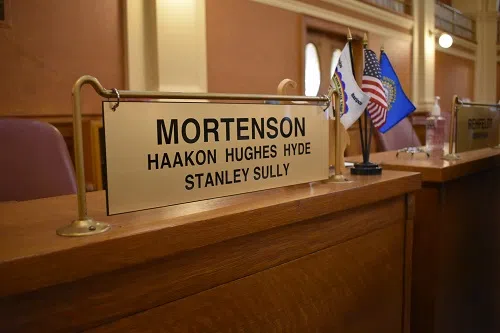
A Question that Should Not Be Asked by District 24 Rep . Will Mortenson
drgnews.com · Feb 15, 2026 · Collected from GDELT
Summary
Published: 20260215T193000Z
Full Article
A Question that Should Not Be Asked by District 24 Rep. Will Mortenson (R-Fort Pierre) (February 15, 2026) Difficult and uncomfortable conversation still need to be had. This is one of those. I am bringing a bill to prohibit statewide elected officials and legislators from raising campaign funds from their high-level employees. Those folks work for the taxpayers, and it puts them in a tough spot when their boss asks for a campaign donation. At its worst, this is known as a “shakedown.” At its best, the campaign donation request can never be free of inherent pressure. It is just a question that should not be asked. I want to be clear: I am not alleging that any inappropriate or overt pressure has been applied by any officeholder. I know all the legislators who would be subject to this law as well as the statewide officeholders. I am not aware of anything overtly unethical, am not alleging anything inappropriate, and mean no disrespect to those folks. In fact, my proposed legislation would not even take effect until January 1, 2027, and would not affect anyone running for office today. Still, this is an important and necessary proposal. Too many aspects of policymaking these days have become about politics and not public service. Perhaps that is unavoidable in the Internet era, or merely an inherent aspect of a democracy where elected officials keep a close eye on the voters’ sentiment, which leads to pandering and political behavior. When it comes to employees who work for the taxpayers, though, we should want them solely focused on public service, and we should do what we can to take politics out of the question.While prohibiting this kind of request may seem like common sense, it is not the law today in South Dakota. It is the law at the federal level and in many other states. The rationale for the proposal is obvious: there is an inherent pressure on an employee when his or her boss asks for a campaign check. The pressure may not be overt and the request may be made in the friendliest terms imaginable, but common sense tells us the question is not a fair one to impose on that employee.I am sure I will be removed from several Christmas card lists over this proposal, but my constituents who work for state government deserve to focus their efforts only on the efficient and effective administration of the public good. I am proud of the folks who lead state agencies and have dedicated their lives to serving other South Dakotans. They deserve our support and protection. Our state is best-served when those folks are focused only on the merits of public service. This year, we can take a step toward that goal, no matter how uncomfortable the process is to get there.The Dawn of Data Centers by Rep. Will Mortenson (R-Fort Pierre) (February 8, 2026) We are entering a new era of the digital age. The first iPhone was unveiled in 2007, around the time this year’s class of high school Seniors were born. Since then, most of us have snapped tens of thousands of photos, taken hours of video, and downloaded countless apps on our phones. Now, all large organizations and most citizens are exploring the world of generative artificial intelligence (AI), which consumes data at rates previously unseen. That AI is useful not just in creating Muppet images of your friends or drafting an email. Harnessing and directing AI is critical for military and economic dominance in the years to come. We need enhanced data infrastructure in this country, because consumers (aka the public) demand it and because the strength of our nation requires it. In South Dakota, we are currently deciding whether to welcome this infrastructure development or whether to use government to block these projects. If we site them, there are substantial economic benefits (jobs and wages) and massive tax-base benefits (lower property taxes and more funding for schools, roads, and law enforcement). If we block the projects through over-taxation or over-regulation, the states around us will permit the market to function, and this infrastructure will get built. As a small government conservative, I believe South Dakota’s decision is an easy one: get government out of the way and encourage this infrastructure to get built. As with any new project, there is fear that comes from the unknown. While the benefits of data centers are clear (and massive), we must be mindful of potential drawbacks as well. Folks often point to concerns about water and power use by these massive infrastructure projects, which might crowd-out consumer use, or make it more expensive. The water issue has been overcome by a ‘closed loop system,’ which does not use all that much water. The electrical issue can and should be confronted to ensure these projects’ electricity costs do not get passed on to other consumers. The good news: the project developers agree with this goal. If you think the electricity consumption risk is just too big, and government should block data centers, I have bad news for you. Our electric supply is regional and does not abide state borders. That is – if the data center is getting built in North Dakota or Wyoming, we are on the same power grid and would have the same potential effects, whether the data center is sited here or there. We cannot bury our heads in the sand to protect ourselves in this arena. We need to get in the game.So, our response should be two-fold: we should welcome this data infrastructure, and ensure they are not over-taxed or overregulated. At the same time, we should consider laws to ensure data centers to internalize their electrical costs and to use the water-preserving ‘closed loop’ system. I believe Dusty Johnson called that “Data Centers Done Right.” His plan is a thoughtful, responsible approach for South Dakota and I believe would be a good start.More generally, we need to get back to being a state and country that builds infrastructure and makes our society stronger for the next generation. We may not know what the world will look like when babies born this year are high school Seniors, but we want to do all we can to provide them with a strong home with real opportunity. We cannot let every online rumor get in the way of building infrastructure that will make South Dakota more prosperous and keep America dominant. We are at the dawn of an era of vast data infrastructure development. Now is the time to look for the path forward, not to run-scared from bumps on the road. Our world needs this data infrastructure and South Dakota should welcome our chance to help build it.Cigar Bars: Where Freedom Meets Local Control by Rep. Will Mortenson (R-Fort Pierre)(February 2, 2026)There may not be two more frequently used buzzwords under the Capitol dome than “Freedom” and “Local Control.” We had a bill this week that would entirely ban a type of fake meat, pushed by people preaching freedom, because it competes with an industry they like (and of which I’m a part – cattle). I believe freedom includes freedom to make a decision I would never make myself, like buying unnatural fake meat. Likewise for local control – the same folks preaching local control will often put mandates on schools, hospitals, and businesses, if it aligns with their political rhetoric. In other words, when you hear someone shouting “freedom” or “local control,” you should just know that those terms are not absolute.With that disclaimer, I wrote a bill this year that I believe perfectly blends freedom and local control. HB1215 would allow (if the city or county wanted to) the creation of a license in each community for a cigar bar. This allows complete discretion in the cities and counties to allow regulated cigar bars, if they choose. If such an establishment is set up, then people can go (or not), if they choose. Currently, there are three cigar bars allowed in the state, in Deadwood, Rapid City, and Sioux Falls. They were all grandfathered in when the smoking ban took effect in 2009. They have tight requirements about ventilation, ensuring cigars-not-cigarettes, and that cigars be a main source of revenue. If they are OK for three communities, they should be allowed in the rest of the state as well, subject to the same requirements. This doesn’t overturn the smoking ban, it just allows the same freedom and local control for all communities that are currently enjoyed in three.I often say, when legislating, that “we don’t need all these laws.” Each year, the legislature adds regulation and cost. I sincerely try to push the other way, and have brought regulation cuts each year I’ve been in the legislature. This year, in the Cigar Bar Bill, we would be granting more discretion to our cities and counties, and more freedom for our citizens. In this bill, freedom really does meet local control, and I can’t wait to get to work on it.Real Partnerships Lead to Real Results in Indian Country by Rep. Will Mortenson (R-Fort Pierre) (January 26, 2026)As chairman of the South Dakota State‑Tribal Relations Committee this summer, I had the honor of working closely with tribal leaders on issues of shared concern. I visited Sisseton, Cheyenne River, and Standing Rock to hear directly from the tribes and the people who live and work on the reservations. As a tribal member, I have long been frustrated by the pessimism of policymakers and lack of solutions when it comes to Indian Country. Building strong state‑tribal relationships is not for photo ops or sentimentalism. Building trust is a necessary step to turning the tide. Our approach must be grounded in mutual respect and informed by the history, culture, and needs of Tribal communities in South Dakota. The policy outcomes in Indian Country are not a given. They are not inherent. We should not throw up our hands and assume these outcomes will always be. We can and we must do better. In our committee hearings and discussions over the summer, we focused on two critical priorities: protecting public safety on and off reservations, and expanding access t
Share this story