newsblaze.com
A Preventive Vision : Longevitix Healthcare Pyramid Signals a Shift From Crisis Response to Biological Stewardship
newsblaze.com · Mar 1, 2026 · Collected from GDELT
Summary
Published: 20260301T161500Z
Full Article
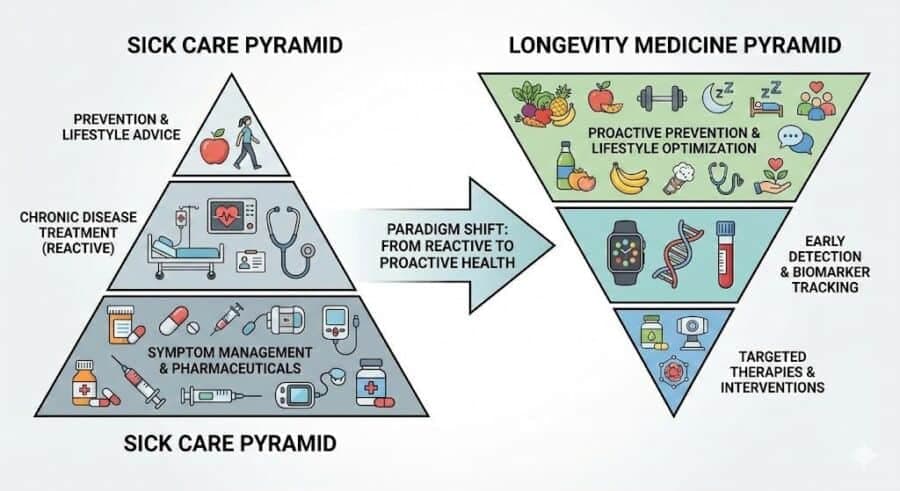
The U.S. healthcare system stands at a crossroads. Decades of escalating expenditures, rising chronic disease prevalence, and fragmented care delivery have revealed a fundamental flaw: a system engineered for reacting to sickness rather than enhancing human biology. Now, a new preventive model is gaining traction, one that seeks to shift the center of gravity from late‑stage intervention to early, continuous insight. Leading this intellectual shift is Longevitix, a preventive care intelligence platform that has introduced its Healthcare Pyramid, a framework that reframes how and when we engage with health. This concept arrives amid a broader reevaluation of health systems worldwide, where preventive nutrition, lifestyle factors, and early detection strategies are increasingly seen as the key to sustainable health outcomes. Why Prevention Matters: The Rising Toll of Chronic Illness Chronic conditions are not just clinical issues; they are economic ones. According to the American Diabetes Association, the total estimated cost of diagnosed diabetes in the U.S. in 2022 was $412.9 billion, including $306.6 billion in direct medical costs and $106.3 billion in indirect costs attributable to lost productivity and disability. These conditions collectively drive a disproportionate share of U.S. healthcare spending. The Centers for Disease Control and Prevention reports that chronic diseases and mental health conditions account for roughly 90% of the nation’s nearly $5 trillion in healthcare expenditures. Yet despite these staggering numbers, the delivery of preventive care remains uneven, with important services like cancer screenings and chronic risk monitoring still not consistently utilized by the population. The Shortcomings of Episodic Care Recent data underscore that many adults are not receiving recommended preventive services even when those services are covered and beneficial. For example, CDC estimates show that in 2023, 80.0% of women aged 50-74 were up to date on breast cancer screening, 75.4% were up to date on cervical cancer screening, and 67.4% of adults aged 45-75 were up to date on colorectal cancer screening, meaning one out of five eligible adults was not current on these basic preventive tests. These gaps in preventive care, including screening uptake below national targets, highlight how episodic, visit‑based systems often fail to engage people before disease takes hold. From Episodic Checks to Continuous Biological Insight A fundamental limitation of traditional healthcare is its reliance on discrete assessments: annual check‑ups, point‑in‑time labs, and symptom‑triggered office visits. In contrast, emerging research shows that digital biomarkers and continuous monitoring, captured through wearable sensors, mobile devices, and passive physiological measurement, can quantify health trends and detect subtle changes long before clinical disease manifests. A 2026 study published in NPJ Digital Medicine demonstrates the potential of continuous and passive digital biomarkers to assess cognitive and affective states using wearable devices in real‑world conditions, signaling early changes in brain health that traditional assessments might miss. This kind of real‑time, longitudinal data offers a completely different view of human physiology than static, episodic visits. Instead of waiting for symptoms, clinicians could detect patterns of metabolic, neural, or cardiovascular drift well before risk thresholds are crossed. The Healthcare Pyramid: An Inverted Model Longevitix’s Healthcare Pyramid is a disciplined reframing of clinical priorities. Whereas traditional frameworks place heavy emphasis on treating disease once it is clinically apparent, the Healthcare Pyramid inverts that logic to elevate preventive practice and early biological insight. At its base, the pyramid places proactive health optimization, including personalized lifestyle support and continuous monitoring guided by individual biology. This foundational layer acknowledges that variation in genetics, environment, and behavior means one‑size‑fits‑all guidance is insufficient. Above that resides early detection and longitudinal risk tracking, leveraging digital biomarkers, biosensor data, and molecular insights to map gradual physiological shifts rather than waiting for them to manifest as disease. At the apex sits targeted intervention, reserved for moments when robust evidence indicates a clear need, ensuring that clinical resources are deployed smartly and sparingly. This structure aligns incentives with healthspan, the years an individual spends in robust health, rather than with acute care utilization alone. Healthspan, a concept now gaining economic and research traction, seeks to quantify and extend the portion of life lived free of major disease. Recent industry analyses highlight healthspan science as a sector attracting growing investment as policymakers and payers recognize its long‑term value. Toward Systemic Realignment Redesigning care frameworks alone is not enough. For a preventive model like the Healthcare Pyramid to reach its potential, payment and delivery systems must evolve. Fee‑for‑service models that reimburse based on volume rather than value inherently disfavor preventive engagement. By contrast, value‑based care arrangements, risk‑sharing contracts, and preventive incentive structures align economic interests with early intervention and long‑term health outcomes. Pilot programs and policy experiments have shown promise. Value‑based insurance design (VBID) initiatives, for instance, reduce patient cost‑sharing for evidence‑based preventive services, and early data suggest this improves uptake while reducing total care costs. Incentive realignment also extends to employers, payers, and public health systems, where preventive strategies, from biometric screening to digital health coaching, have shown favorable return on investment in real‑world evaluations. Designing Healthcare for Biology What sets Longevitix’s model apart is not merely its critique of the status quo, but its explicit orientation toward human biology as the organizing principle of care. Where traditional healthcare views health as the absence of disease, this preventive paradigm treats health as a dynamic process, continuously measured, understood, and optimized. In doing so, the Healthcare Pyramid offers a compelling alternative to systems that wait for illness before acting, a model better suited to the biological realities of chronic disease progression and, ultimately, more aligned with individuals’ lived experiences of health and aging. As health systems, payers, and policymakers grapple with unsustainable costs and outcomes, Longevitix’s pyramid may prove to be an early blueprint for a biologically grounded future of care, one where illness is prevented, not just treated.
Share this story