dailygalaxy.com
A Cave Sealed by Volcanoes for 1 Million Years Reveals 16 Ancient Fossils Never Seen Before
dailygalaxy.com · Feb 27, 2026 · Collected from GDELT
Summary
Published: 20260227T171500Z
Full Article
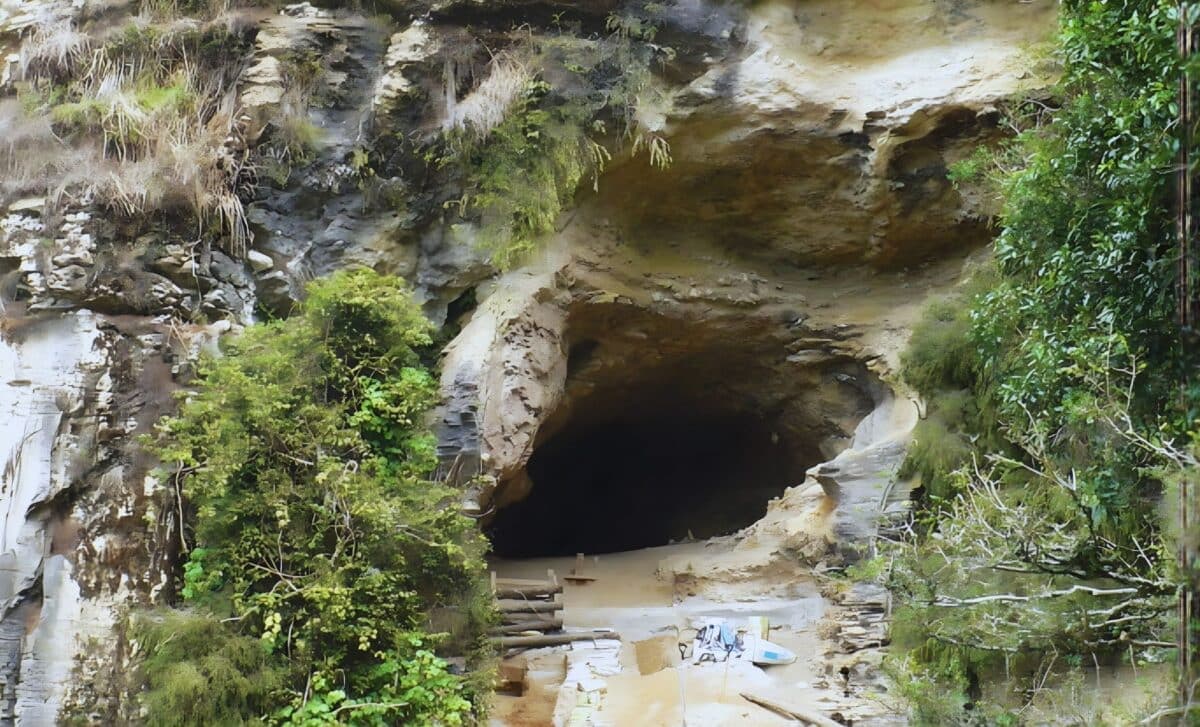
© Credit: Alcheringa: An Australasian Journal of Palaeontology A cave on New Zealand’s North Island has revealed an extraordinary cache of fossils. Preserved for more than one million years, the remains capture a vanished forest ecosystem that existed long before humans set foot on the islands. The discovery includes fossils from 12 ancient bird species and four frog species, several of them previously unknown to science. The findings, published in Alcheringa: An Australasian Journal of Palaeontology, fill a major gap in the fossil record between earlier Miocene ecosystems and the wildlife encountered by humans roughly 750 years ago, according to the researchers. A Lost Bird World Before Humans The research team published a study on the find in Alcheringa: An Australasian Journal of Palaeontology. “This is a newly recognized avifauna for New Zealand, one that was replaced by the one humans encountered a million years later,” as explained by Trevor Worthy, associate professor at Flinders University and lead author of the study. “This remarkable find suggests our ancient forests were once home to a diverse group of birds that did not survive the next million years.” Images capturing the southern section of Moa Eggshell Cave, where distinct fossil layers were exposed during excavation. Credit: Alcheringa: An Australasian Journal of Palaeontology Scientists emphasize that many of the species represented among the fossils had already gone extinct by the time humans arrived on the island. Locked In Time Between Two Volcanic Ash Layers The team located the fossils between two layers of volcanic ash preserved in the cave, each tied to a different major eruption. The first layer dates to about 1.55 million years ago, and the second to about 1 million years ago. By extrapolation from the fossil record, the research team estimated that 33 to 50 percent of all species on the island went extinct during the million years before humans arrived in New Zealand. The images show the shape and main features of the frog fossils. Credit: Alcheringa: An Australasian Journal of Palaeontology Co-author Paul Scofield, Canterbury Museum senior curator of natural history, said rapid climate shifts and cataclysmic volcanic eruptions likely drove much of that loss. Worthy added in a statement: “For decades, the extinction of New Zealand’s birds was viewed primarily through the lens of human arrival 750 years ago. This study proves that natural forces like super-volcanoes and dramatic climate shifts were already sculpting the unique identity of our wildlife over a million years ago.” A Vanished Pigeon Cousin The researchers also uncovered an ancestor of the modern Takahe, which opens further research into that bird. They also found fossils in the cave of an extinct pigeon species closely related to Australian bronzewing pigeons, a connection that stood out to researchers. “The shifting forest and shrubland habitats forced a reset of the bird populations,” Scofield said. “We believe this was a major driver for the evolutionary diversification of birds and other fauna in the North Island.” Moa bones from Moa Eggshell Cave. Credit: Alcheringa: An Australasian Journal of Palaeontology Scofield said previous excavations showed life in New Zealand between 20 and 16 million years ago. By contrast, the new discoveries offer the first evidence of life spanning from 15 million years ago to one million years ago. “This wasn’t a missing chapter in New Zealand’s ancient history,” he said, “it was a missing volume.” Who is the author, Melissa Ait Lounis?Melissa holds a degree in Microbial Biotechnology and Plant Valorization from the Mouloud Mammeri University (UMMTO) in Tizi-ouzou, Algeria, with a strong background in biology and geology. With a focus on Earth systems and natural phenomena, she contributes to Daily Galaxy, where she covers topics like seismic activity, planetary science, and space exploration in a way that's easy to understand. She's also really into archaeology, adding a rich perspective on Earth's history and human origins to her scientific work. The Daily Galaxy --Great Discoveries Channel is an independent media. Support us by adding us to your Google News favorites: Follow us on Google News See also in “Science”Scientists Unearth Over 200 Fossilized Eggs Found in a Single Block in China, and What They Found Inside Is RareFebruary 27, 2026In The Ruins Of Chernobyl’s Reactor, Scientists Found A Fungus That Developed A Stunning AbilityFebruary 27, 2026A Chinese Team Just Found a Way to Turn Desert Sand Into Soil Without Planting A Single TreeFebruary 27, 2026The Y Chromosome Is Vanishing, And the Effects on Men Have Already BegunFebruary 27, 2026Scientists Uncover Clear Evidence of Liquid Water, Not Just Frozen Ice on MarsFebruary 27, 2026Scientists Discover New Evidence of Tattoos Highjacking Your Immune System Years After the Needle StopsFebruary 27, 2026
Share this story