Gizmodo
Clustered Story
5 Medical Innovations on HBO’s ‘The Pitt’ That Are Revolutionizing Emergency Care
Gizmodo · Feb 26, 2026 · Collected from RSS
Summary
The hit medical drama often showcases cutting edge—and sometimes controversial—technologies that are changing the way doctors save lives.
Full Article
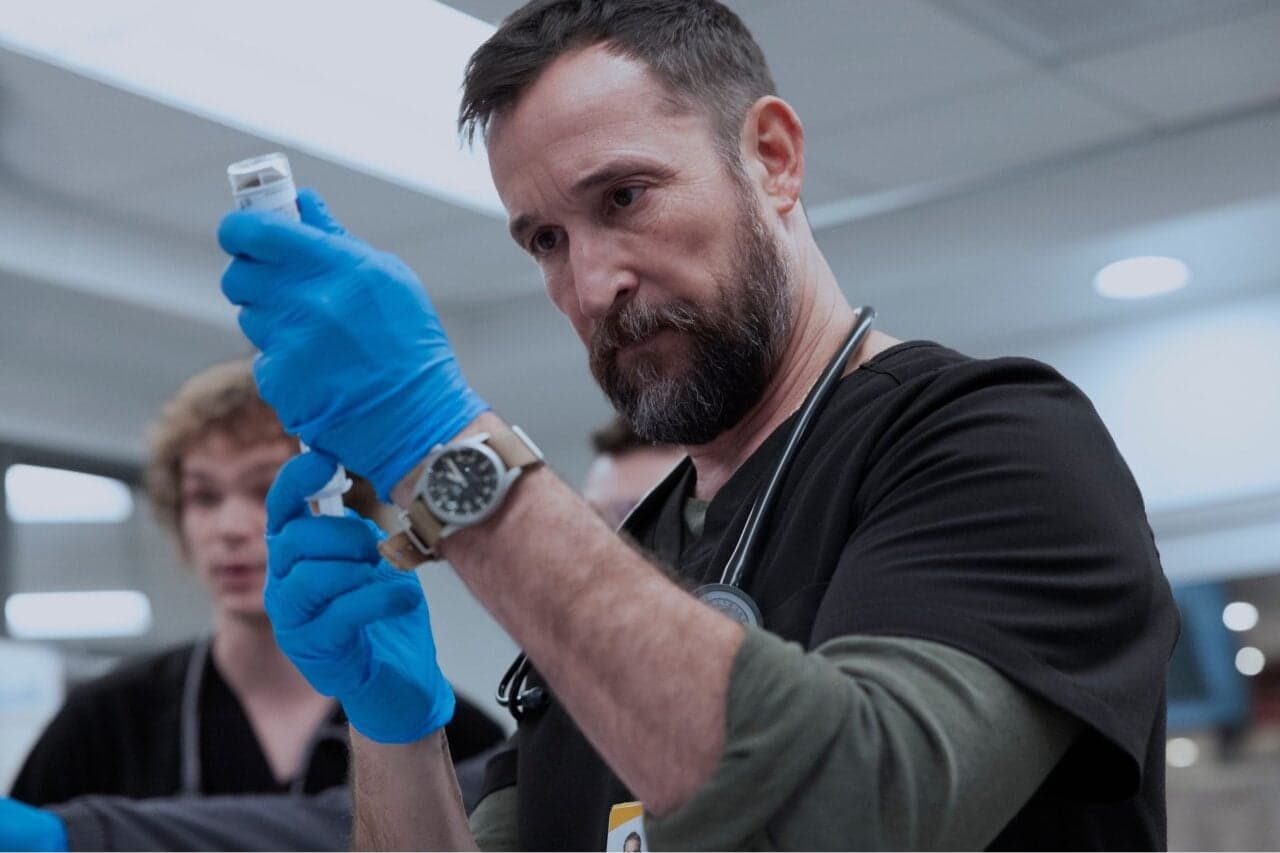
If you’re as obsessed with HBO’s The Pitt as I am, you’ve been spending every Thursday night glued to the TV, hoping to find out why the heck Dr. Al Hashimi is acting so weird around baby Jane Doe. And if you’re a science nerd like I am, you’ve probably noticed some of the fascinating medical technologies featured on the show and wondered, what is that thing? This hit medical drama, which follows the chaotic daily lives of the Pittsburgh Trauma Medical Center ER staff, has received much praise from the healthcare community for its accurate depiction of complex medical conditions, procedures, and emergency room protocols. The series often showcases real, cutting-edge tools that are reshaping emergency care, from robots to AI. If you’re craving a deep dive into some of the most groundbreaking innovations that have appeared on the show so far, this one’s for you. Just proceed with caution—there are spoilers ahead. LUCAS chest compression system LUCAS 3 is a robot that administers automated, continuous CPR. © Doc James via Wikimedia Commons This next-generation medical device is featured in the pilot episode of the series, when first responders wheel in an elderly woman suffering from ventricular fibrillation, or V-fib. To keep her alive en route to the hospital, paramedics fitted her with a LUCAS 3 chest compression system—a robot that administers automated, continuous CPR with the press of a button. According to Lund University, Norwegian inventor Willy Vistung came up with the idea for the device that would eventually be called LUCAS (Lund University Cardiopulmonary Assist System) after watching paramedics try to administer CPR in the back of a speeding ambulance. He constructed a prototype of a pneumatic mechanical system designed to do chest compressions and patented it in 1997. Vistung himself died of cardiac arrest long before his invention became widely used, but Stig Steen, a cardiothoracic surgeon, made sure that it did. With permission from Vistung’s widow and funding from Lund University, he and his colleagues built and tested LUCAS, an electronic CPR robot adapted from Vistung’s original design. The latest version of this device, LUCAS 3, received FDA clearance in 2018. In addition to providing continuous compressions, this iteration allows medical professionals to tailor setup options for compression rate and depth, pauses, alerts, timers, and ventilation features. It can even connect to WiFi so that care teams can check the device’s status, adjust settings, and get reports remotely. Butterfly iQ3 handheld ultrasound Butterfly iQ3 handheld point-of-care ultrasound device © Business Wire Episodes 12 and 13 of season 1 center around a mass-casualty shooting that sends dozens of critically wounded patients flooding into the Pittsburgh ER. Dr. Robby quickly orders his staff to remove traditional cart-based ultrasound equipment to make space for them. The doctors instead rely on a point-of-care ultrasound (POCUS) device called Butterfly iQ3. This portable, handheld ultrasound machine connects to a smartphone to display imagery and is designed for use in high-volume trauma care settings. POCUS technology has been around since the 1990s, but Butterfly iQ3 only became available in 2024. What sets this device apart from its predecessors is built-in AI enhancement that guides scanning, automatically captures the best images, and helps clinicians quickly interpret anatomy and measurements. Throughout these two episodes, the staff uses this next-generation device to check for internal bleeding, evaluate blood flow, and assess intracranial pressure, demonstrating how portable ultrasound technology can expedite patient care in chaotic, high-stakes emergency situations. AI-assisted charting The Pitt features AI transcription software, similar to this app called Abridge, that assists doctors with charting © Stacey Wescott/Chicago Tribune/Tribune News Service via Getty Images Sepideh Moafi joined The Pitt in season 2 as Dr. Baran Al‑Hashimi, a confident, tech-savvy attending who will run the ER while Chief Dr. Michael “Robby” Robinavitch (Noah Wyle) is on sabbatical. As soon as she arrives on the scene, she’s eager to shake things up. Al‑Hashimi introduces the staff to an AI transcription software designed to expedite their charting, which raises more than a few eyebrows. Season 2 has been peppered with not-so-subtle digs at AI, mainly centered on its tendency to make mistakes. When Dr. Trinity Santos—a second-year resident played by Isa Briones—tried out the software in episode 6, it hallucinated a history of appendicitis in a patient’s medical record and confused “urology” with “neurology.” AI is rapidly becoming more prevalent in hospitals, and not just for charting. Emergency departments are adopting AI-powered tools for triage and risk stratification, imaging interpretation, decision support, and more. The Pitt examines these tools through a highly skeptical lens. While Al-Hashimi insists that the error rate is small and mistakes can be prevented through proofreading, the show points out real risks and shortcomings, questioning the notion that AI can be just as accurate and reliable as human doctors. Virtual reality An elderly patient wearing a virtual reality headset © David Pereiras via Shutterstock When a child comes into the ER with beads shoved up his nose in episode 3 of season 2, Dr. Frank Langdon—a fourth-year resident played by Patrick Ball—knows just what to do to keep the young patient calm during the extraction. Langdon gives the kid a virtual reality headset and handheld controller so that he can play an immersive video game while he pulls the beads out. VR is increasingly used in emergency rooms as a non-pharmacological tool to reduce patients’ pain and anxiety. It works by flooding the brain with visual and auditory signals, producing a powerful distraction that convinces the body it isn’t feeling sensations exterior to the simulation, such as discomfort. Beyond patient care, VR is also playing a growing role in medical training. The technology can be used to run immersive, risk-free, and repeatable simulations to help students hone their skills and may also be more efficient and cost-effective than some traditional training methods. XStat An XStat is essentially a syringe filled with dozens of tiny, super absorbent sponges that can pack a deep wound in seconds. © Ellyn Lapointe In season 2 episode 4, overeager student doctor James Ogilvie—played by Lucas Iverson—pulls a large shard of glass out of a patient’s back and triggers an arterial bleed. To stop the bleeding, Dr. Robby uses an XStat, a rapid-acting hemostatic device. The FDA approved this lifesaving innovation for use on the battlefield in 2014 and for civilian use in 2015. It’s essentially a syringe filled with many tiny, super-absorbent cellulose sponges that a doctor or first responder can inject deep into a wound. Upon contact with blood, the sponges expand to fill the wound cavity within just 20 seconds, creating a barrier to blood flow and providing hemostatic pressure. The XStat offers a highly efficient alternative to manually packing a wound with gauze, which not only takes longer but also isn’t always effective. Not to mention that it can be extremely painful for the patient.
Share this story